- Plot No. 453-454, HSIIDC, Industrial Area, Saha, Haryana 133104

Grain Cleaner

Grading Machine in India
August 20, 2026
Wheat Cleaning Machine
August 28, 2026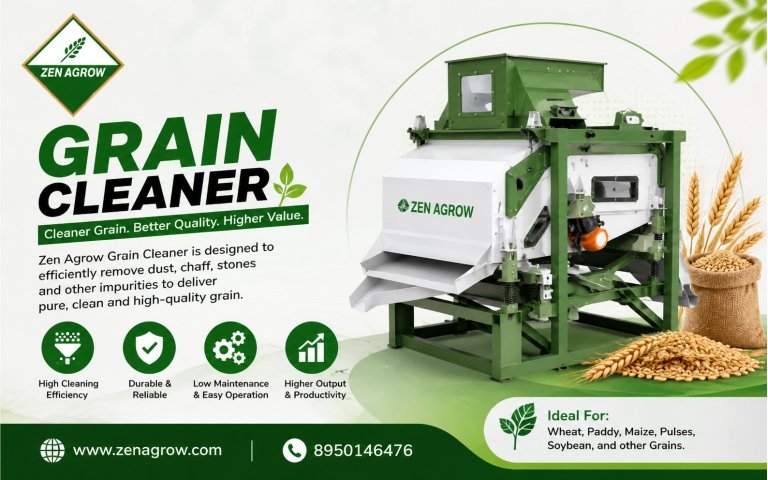
Grain Cleaner: The Complete Guide to Choosing the Right Grain Cleaning Machine for Your Farm or Business
If you work anywhere along the grain supply chain — as a farmer, a miller, a seed processor, or a warehouse operator — you already know one thing. Raw grain straight off the field is never truly “clean.” It carries dust, chaff, broken kernels, weed seeds, stones, and straw. Sometimes it even carries metal fragments picked up during harvesting. This is exactly where a grain cleaner becomes indispensable. A good grain cleaner doesn’t just make your grain look better. It protects your yield, improves storage life, increases market value, and safeguards the machinery downstream in your processing line.In this guide, we’ll walk through everything you need to know about a grain cleaner. We’ll cover how it works, why it matters, and the different types available. We’ll also show you how to pick the right grain cleaner machine for your specific operation. Whether you’re a small farm owner or a large agri-business, this article will help you make an informed decision.
What Is a Grain Cleaner?
A grain cleaner is an agricultural machine designed to separate unwanted material from harvested grain. The goal is simple. Take grain that has just come off the combine or out of storage, and remove everything that isn’t grain. That includes dust, husks, stones, weed seeds, straw, broken or shrivelled kernels, and foreign particles like plastic or metal.
Grain cleaning is usually one of the very first steps in post-harvest processing. Before grain is stored, milled, sold, or used as seed for the next season, it needs to pass through a cleaning stage. Skipping this step often leads to spoilage. It can also mean reduced quality grading, pest infestation, and lower prices at the mandi or export market.
Modern grain cleaner machines combine screening, air separation, and sometimes gravity or magnetic separation. Together, these achieve thorough cleaning in a single pass. This is very different from manual winnowing, which is still used on some smaller farms. Manual methods are slow, inconsistent, and labor-intensive.
Why a Grain Cleaner Machine Matters for Modern Agriculture
The demand for efficient grain and seed cleaning equipment has grown steadily worldwide. Farms are scaling up, and food safety standards keep tightening. Industry research shows the global market for grain and seed cleaning machinery is valued well into the billions of dollars. It continues to expand at a healthy pace year over year. This growth is driven by rising grain production, stricter quality requirements from food processors, and growing mechanization in developing economies.
This growth signals something important. Grain cleaning is no longer an optional post-harvest step. It’s now a core requirement for competitive, quality-driven farming.
Key Benefits of Using a Grain Cleaner Machine
Here’s why this matters practically for you:
- Better market price: Clean, uniform grain grades higher. It fetches a better price from buyers, millers, and exporters.
- Longer storage life: Dust, moisture-laden chaff, and broken kernels accelerate spoilage and mold growth. Clean grain stores longer with fewer losses.
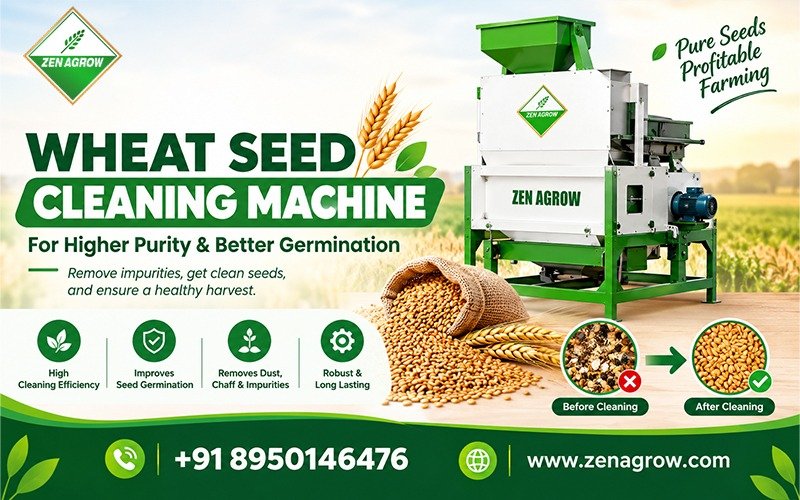
- Improved seed germination: For seed producers, a grain cleaner machine removes undersized, cracked, or diseased seeds. This directly boosts germination rates for the next planting season.
- Protection for downstream machinery: Stones and metal fragments can seriously damage mills, dryers, and packaging lines. Cleaning grain first protects your capital equipment.
- Regulatory and export compliance: Many export markets require grain to meet specific purity thresholds. This simply isn’t achievable without proper cleaning equipment.
How Does a Grain Cleaner Work?
Understanding the working mechanism helps you choose the right grain cleaner machine for your needs. Most machines rely on a mix of the following processes.
1. Pre-Cleaning Stage
Raw grain is fed into the machine first. Large impurities like straw, stalks, and clumps of soil are removed using coarse screens or rotating drums.
2. Screening and Sieving
The grain passes over a series of vibrating or oscillating sieves with different mesh sizes. Oversized material stays on top. Undersized particles like dust and small weed seeds fall through. The properly sized grain moves forward.
3. Air Separation (Aspiration)
A controlled airflow blows away lightweight material such as chaff, husk, dust, and empty kernels. The heavier, healthy grain continues down the line.
4. Gravity and Density Separation
Some advanced grain cleaner machines use gravity tables or specific gravity separators. These separate grains of similar size but different density — useful for removing stones or grains with hidden internal damage.
5. Magnetic Separation
A magnetic unit removes any ferrous metal contamination. This metal may have entered the grain during harvesting or handling. Removing it protects both consumers and machinery.
The result, after passing through these stages, is grain that is uniform and clean. It’s ready for the next step — whether that’s storage, milling, packaging, or sowing.
Types of Grain Cleaner Machines
Not every farm or facility needs the same kind of equipment. Here’s a breakdown of the common types of grain cleaner machines available in the market today:
- Air Screen Cleaners: The most widely used type, combining vibrating screens with air aspiration. Suitable for a broad range of grains and seeds.
- Gravity Separators: Best used for high-precision cleaning where grains of similar size but different density need separating, such as removing stones from wheat or paddy.
- Indented Cylinder Separators: Used to separate grains by length rather than width or weight. Ideal for removing broken kernels or foreign seeds.
- Magnetic Cleaners: Focused specifically on removing metallic contamination. Often used as a secondary or final cleaning stage.
- Destoners: Specialized machines designed to remove stones and heavy inorganic material. Commonly used in rice and pulse processing.
- Optical Sorters: Higher-end machines that use camera and sensor technology to spot discolored or damaged grains. Typically used by larger processing units.
- Portable/Mobile Grain Cleaners: Compact units designed for smaller farms or mobile use. These offer flexibility to move between fields or storage sites.
Key Factors to Consider Before Buying a Grain Cleaner
Choosing the right grain cleaner machine isn’t just about price. Here are the factors that matter most:
- Capacity requirement: Match the machine’s throughput to your actual harvest volume. Undersized machines create bottlenecks; oversized machines waste capital.
- Type of grain or seed: Wheat, rice, maize, pulses, and oilseeds all behave differently on screens and in airflow. Confirm the machine can be calibrated for your crop.
- Automation level: Fully automatic machines reduce labor dependency. Semi-automatic units may suit smaller operations with tighter budgets.
- Build quality and material: Look for robust construction and components that resist wear from abrasive grain dust.
- Ease of maintenance: Screens, sieves, and blowers need regular cleaning. Choose a machine with accessible components and available spare parts.
- After-sales support: A grain cleaner is a long-term investment. Reliable service and spare-parts availability matter as much as the machine itself.
- Power consumption: This matters most in areas with unreliable electricity. Check motor ratings and how efficiently the machine runs.
- Space and installation requirements: Some machines need a dedicated shed or elevated platform. Plan your layout in advance.
Grain Cleaner vs. Traditional Winnowing: Why Mechanization Wins
Many smaller farms in developing regions still rely on manual winnowing. This means tossing grain into the air and letting the wind carry away lighter chaff. This method has worked for generations. But it comes with serious limitations compared to a modern grain cleaner machine.
Limitations of Manual Winnowing
- Inconsistent results: Manual winnowing depends heavily on wind conditions and operator skill. This leads to uneven cleaning.
- High labor cost and time: Cleaning large quantities manually is slow. It also requires multiple workers.
- Limited impurity removal: Manual methods struggle to remove stones, metal fragments, or grains similar in weight and size to the crop.
- No scalability: As farm output grows, manual methods simply can’t keep pace.
Mechanized grain cleaners solve all of these problems. They deliver consistent, high-volume output regardless of weather or operator experience. This is a major reason mechanization keeps expanding across the agricultural equipment sector.
Industry Growth and Why Investing in a Grain Cleaner Machine Makes Sense Now
Global grain production continues to rise as food demand increases. This growth is directly fueling demand for grain and seed cleaning machinery across every region. Market analysts point to rising food processing standards and the expansion of the animal feed industry as key drivers. Growing mechanization in emerging economies also plays a major role.
For farm owners and agri-businesses, this trend signals two things. First, clean, well-graded grain is now the baseline expectation from buyers and processors, not a bonus. Second, investing in reliable cleaning equipment now positions your operation to meet rising quality demands, rather than scrambling to catch up later.
How Zenagrow Fits Into This Picture
This is precisely the gap that Zenagrow aims to fill. As a manufacturer focused on practical, durable agricultural machinery, Zenagrow designs grain cleaner machines built for real farm conditions — not just laboratory settings. The goal behind every Zenagrow grain cleaner is simple. Give farmers and processors a machine that is easy to operate, simple to maintain, and tough enough for daily use across multiple harvest seasons.
How Zenagrow Approaches Grain Cleaning Equipment
Zenagrow understands that no two farms are identical. A grain cleaner that works well for wheat in one region may need adjustment for rice or maize elsewhere. That’s why Zenagrow focuses on building grain cleaner machines that combine:
- Reliable screening and aspiration systems tuned to handle a range of grain types without constant recalibration.
- Sturdy construction designed to withstand continuous operation in dusty, high-throughput environments.
- Straightforward maintenance, so operators aren’t dependent on specialized technicians for routine upkeep.
- Scalable capacity options, so growing farms can select equipment that matches their current volume, with room to expand.
For anyone comparing agricultural machinery manufacturers, the practical question isn’t just which grain cleaner machine has the most features. It’s which manufacturer will support that equipment for years of daily use. That’s the standard Zenagrow builds toward.
Maintenance Tips to Extend the Life of Your Grain Cleaner
Getting the most value out of your grain cleaner machine means taking care of it properly. Keep these practices in mind:
- Clean screens and sieves regularly to prevent clogging from dust and residue buildup.
- Inspect belts and motors periodically for wear, unusual noise, or overheating.
- Lubricate moving parts according to the manufacturer’s recommended schedule.
- Check airflow settings before each new grain batch, since different crops need different aspiration strength.
- Store the machine in a dry, covered area when not in use to prevent rust and dust buildup.
- Train operators properly so the machine runs within its rated capacity and settings.
- Keep spare parts on hand for high-wear components like screens and belts, to avoid downtime during peak season.
Frequently Asked Questions About Grain Cleaners
1. What is the main purpose of a grain cleaner? A grain cleaner removes impurities such as dust, chaff, stones, weed seeds, and broken kernels from harvested grain. This improves its quality, storage life, and market value.
2. How is a grain cleaner different from a grain cleaner machine used for seeds? The core mechanism is similar. But seed-focused grain cleaner machines often include finer screening and grading stages, since seed quality standards are stricter than those for commercial grain.
3. What capacity of grain cleaner do I need for a small farm? Small farms typically do well with machines rated for a few hundred kilograms per hour. Larger commercial operations may need machines rated for several tons per hour. Calculate your average daily harvest volume first.
4. Can one grain cleaner machine handle multiple types of grain? Yes. Many machines adjust for different grains like wheat, rice, maize, and pulses by changing screen sizes and airflow settings. Highly specialized crops may need dedicated attachments.
5. How often should a grain cleaner be serviced? Clean the screens after every use. A full mechanical inspection — checking belts, motors, and bearings — is generally recommended every few months or at the start of each harvest season.
6. Does a grain cleaner remove stones and metal automatically? Basic air screen cleaners mainly remove dust, chaff, and lightweight material. Removing stones typically needs a gravity separator or destoner. Removing metal needs a magnetic separation unit. Check which components your machine includes.
7. Is investing in a grain cleaner machine worth it for a small or medium farm? Yes. Even at a smaller scale, better grain quality and reduced storage losses usually offset the initial investment within a few harvest cycles. This is especially true compared to the labor cost of manual cleaning.
Final Thoughts
According to the FAO (Food and Agriculture Organization of the United Nations), grain cleaning is an essential post-harvest operation because removing impurities helps improve grain quality and prepares it for safe storage, marketing, and further processing.
Whether you’re upgrading from manual winnowing or replacing outdated equipment, take your time. Evaluate capacity, grain type compatibility, build quality, and after-sales support before you buy. Manufacturers like Zenagrow are built around exactly this need. They deliver agricultural machinery that farmers and processors can rely on season after season, without unnecessary complexity or downtime.
Choosing the right grain cleaner today means fewer losses, better prices, and a stronger foundation for your entire post-harvest operation tomorrow.

 English