- Plot No. 453-454, HSIIDC, Industrial Area, Saha, Haryana 133104

Agriculture Machine Company in India

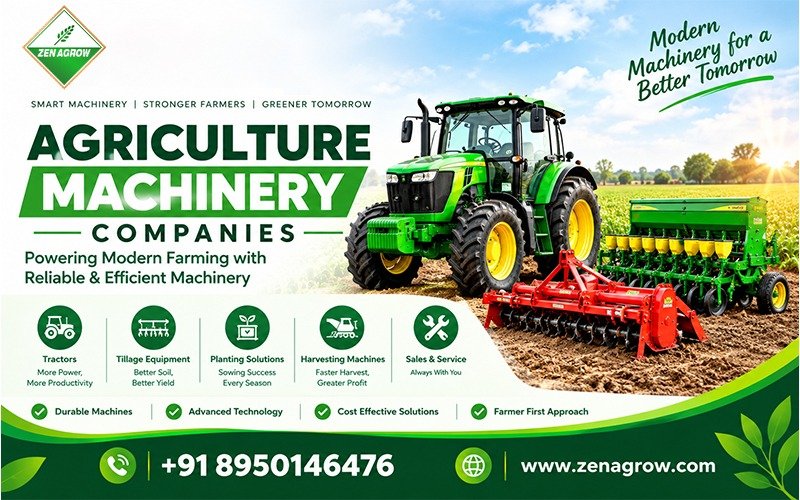
Agriculture Machinery Companies
October 19, 2026Agriculture Machine Company in India: A Guide to Modern Agricultural Equipment
Finding a reliable agricultural machinery manufacturers partner is important for farmers, seed processors, grain traders, and food-processing businesses. The right agriculture machine company in India can help improve cleaning, grading, separation, and material-handling operations while reducing repetitive manual work. As agricultural production grows and processing requirements become more demanding, suitable machinery plays an essential role in preparing crops for storage, marketing, and further use.
Zenagrow: An Agriculture Machine Company in India for Grain and Seed Processing
Zenagrow is an Indian agricultural machinery business serving the needs of customers involved in grain cleaning, seed processing, grading, and agricultural material handling. Through its website, https://www.zenagrow.com/, customers can explore machinery solutions for different stages of agricultural processing.
Agricultural businesses work with different crops, processing capacities, and quality requirements. A machine suitable for a small seed-processing unit may not be appropriate for a large commercial plant. Therefore, selecting equipment requires careful consideration of crop characteristics, the type of impurities present, the desired output, and the available workspace.
Zenagrow focuses on agricultural processing equipment that can help businesses manage important operations such as removing unwanted materials, separating grain fractions, and preparing seeds for subsequent processing. Customers can review the available machinery and identify solutions that match their operational requirements.
For buyers comparing agricultural machinery manufacturers in India, it is useful to evaluate not only the machine’s purchase price but also its construction, operating requirements, maintenance needs, and suitability for the intended crop.
Why Agriculture Machine Companies Are Important in India
Agriculture is a major part of India’s economy, and agricultural products often pass through several stages before reaching consumers, markets, mills, or seed distributors. During these stages, proper handling and processing can influence product cleanliness, consistency, storage preparation, and commercial presentation.
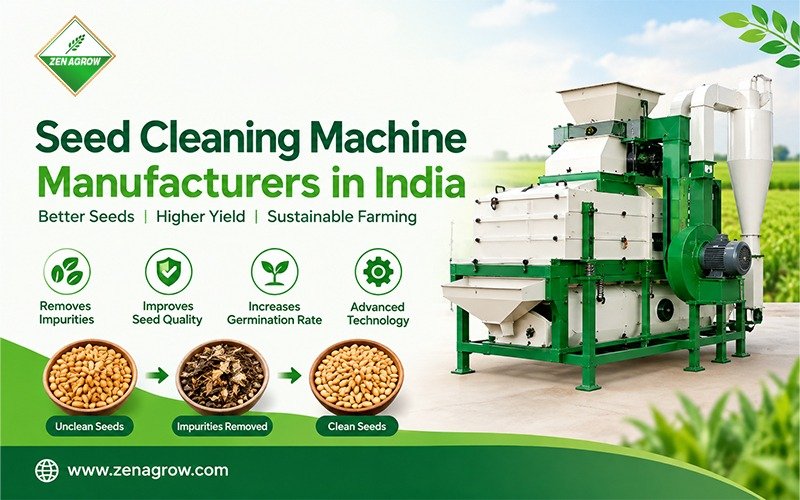
An agriculture machine company supports these activities by supplying equipment designed for specific processing tasks. Depending on the operation, machinery may help remove dust and light impurities, separate heavier contaminants, classify seeds by size, or move grain between different processing stages.
Manual cleaning and sorting can require substantial time and labour, particularly when a business handles large quantities of agricultural material. Suitable machinery can make these operations more systematic and help businesses maintain a consistent workflow.
The benefits depend on the machine selected, the condition of the incoming material, correct adjustment, and regular maintenance. Equipment should always be matched to the actual processing objective rather than chosen only because it has a high advertised capacity.
Types of Agricultural Machinery Used in Grain and Seed Processing
Different machines perform different functions. Understanding their purpose helps buyers select equipment that fits their production process.
1. Grain Separator Machine
A grain separator machine helps separate agricultural materials according to differences such as size, weight, or other physical characteristics, depending on the machine’s design. It can be used as part of a grain-processing line to improve material separation and prepare grain for further operations.
The required separation method depends on the crop and the impurities present. Buyers should consider the machine’s working principle, capacity, adjustment options, and compatibility with other equipment.
Explore Zenagrow’s Grain Separator Machine to learn more about this category of processing equipment.
2. Grain Grading Machine
A grain grading machine classifies grain into different grades or fractions according to defined physical characteristics. Depending on the design, grading may use screens, sieves, or other separation mechanisms.
Grading can help agricultural businesses prepare more uniform batches for storage, trading, milling, or further processing. However, grading does not automatically guarantee a particular market grade; the final result also depends on crop quality and the applicable grading standards.
Learn more about the Grain Grading Machine available through Zenagrow’s website.
3. Seed Grading Machine
Seed grading machines help classify seeds into different size fractions, depending on the machine configuration. This can be useful for seed processors who need to separate mixed seed lots into more consistent groups before additional processing or packaging.
When choosing seed grading equipment, consider the type of seed, seed dimensions, processing volume, and the desired separation accuracy. The machine should handle the seed gently enough for the intended application.
Businesses searching for specialist suppliers can visit Zenagrow’s page for Seed Grading Machine Manufacturers in India.
4. Wheat Cleaning and Grading Machine
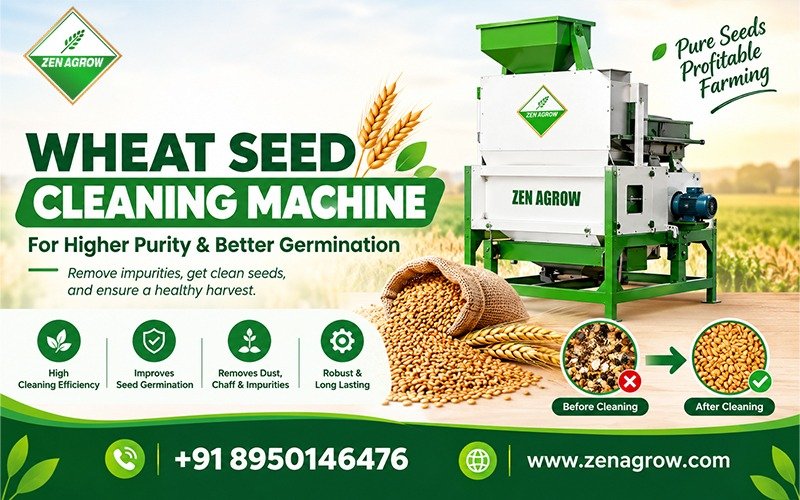
Wheat cleaning and grading machines are used to remove unwanted materials and classify wheat according to the capabilities of the equipment. Cleaning may target dust, chaff, weed seeds, and other foreign matter, while grading can separate material into different fractions.
These operations are important for businesses preparing wheat for storage, trading, milling, or additional processing. Buyers should assess the incoming wheat condition, expected throughput, available floor space, and the cleaning stages required.
For more information, explore Zenagrow’s Wheat Cleaning and Grading Machine page.
5. Seed Grading Equipment
Seed grading equipment includes machines and systems used to classify seed lots for further processing. The exact configuration depends on the crop, the physical properties of the seeds, and the required production capacity.
Some operations may require a single grading machine, while larger facilities may benefit from a combination of cleaning, grading, conveying, and collection equipment. The complete processing line should be planned to avoid unnecessary handling and bottlenecks.
Explore Seed Grading Equipment to understand this category of agricultural processing machinery.
How to Choose the Right Agriculture Machine Company in India
Selecting a machinery supplier is an important business decision. The right choice should reflect both current production needs and future operating plans.
Assess Your Crop and Processing Requirements
Begin by identifying the crop you process, the amount of incoming material, and the quality issues you need to address. Wheat, rice, pulses, maize, oilseeds, and smaller seeds may require different machine settings or equipment configurations.
Make a list of the impurities you need to remove and whether your operation requires cleaning, grading, separation, or a combination of these processes.
Check the Required Processing Capacity
Manufacturers may specify capacity using different units or under particular operating conditions. Ask how the stated capacity applies to your crop and incoming material.
A machine’s actual output can vary with moisture content, impurity levels, feeding consistency, and operating settings. Request application-specific information before making a purchase decision.
Review Machine Construction and Components
The construction of agricultural machinery can affect its durability, stability, and maintenance requirements. Review the materials used in important components, the quality of the frame, the drive arrangement, and the accessibility of parts that require regular servicing.
Ask for technical specifications and clarification about any components that are critical to your process.
Consider Maintenance and Spare Parts
Routine maintenance helps machinery operate more reliably. Before purchasing, ask about cleaning procedures, lubrication requirements, wear parts, spare-part availability, and the recommended service schedule.
A machine that is easy to inspect and maintain may help reduce avoidable downtime over its working life.
Compare Total Operating Costs
The lowest initial price does not always represent the best long-term value. Consider the purchase price alongside electricity consumption, labour requirements, maintenance expenses, spare parts, installation, and expected operating hours.
Compare quotations on the basis of similar specifications and processing requirements.
Confirm Installation and Technical Support
For a larger processing line, installation and equipment coordination can be important. Ask the supplier what support is available for setup, operator training, troubleshooting, and commissioning, and confirm any applicable terms before ordering.
Benefits of Using Suitable Agricultural Processing Machinery
Agricultural machinery can help businesses organise processing activities and handle larger volumes more systematically. The results depend on equipment selection and operating conditions.
Important potential benefits include:
- More systematic cleaning: Suitable machines can help remove targeted impurities from incoming grain or seed lots.
- Improved grading consistency: Properly configured grading equipment can separate material into more uniform fractions.
- Reduced repetitive manual work: Mechanised processing can reduce the need for labour-intensive manual sorting.
- Better workflow management: Connected equipment can help organise feeding, cleaning, grading, and collection stages.
- Support for larger processing volumes: Correctly sized machinery can help businesses handle production requirements more efficiently.
- Improved preparation for storage: Removing unwanted materials can support better preparation of agricultural products for storage, subject to appropriate moisture and storage management.
- Flexible processing arrangements: Different machine configurations can serve different crop types and processing objectives.
- More informed quality control: Consistent processing procedures can make it easier to inspect output and identify operating problems.
These benefits are not automatic. Businesses should verify performance against their crop, required output, and actual working conditions.
Applications of Agriculture Machines Across Agricultural Businesses
Agricultural processing machinery serves a wide range of commercial and operational needs.
Farmers and Farmer Producer Organisations
Farmers and farmer groups may use cleaning and grading equipment to prepare harvested crops for storage, sale, or further processing. The appropriate machine depends on the quantity handled and the intended use of the crop.
Seed Processing Companies
Seed processors may require cleaning and grading systems to prepare seed lots for additional processing and packaging. Equipment selection should account for seed size, handling characteristics, and the quality-control procedures used by the business.
Grain Traders and Aggregators
Grain traders may use suitable machinery to clean and classify agricultural commodities before storage or sale. Consistent processing can support product presentation, although commercial acceptance depends on buyer specifications and applicable standards.
Flour Mills and Food Processing Units
Flour mills and food-processing businesses may require preliminary cleaning to reduce unwanted material entering later stages of production. The required equipment depends on the crop, the processing line, and the cleanliness specifications of the facility.
Agricultural Machinery Dealers
Dealers and distributors can help customers identify machinery suited to different production needs. Clear technical information, application guidance, and an understanding of local customer requirements are useful when comparing equipment suppliers.
Practical Tips for Getting Better Results from Agricultural Machinery
Correct operation is as important as machine selection. Even suitable equipment may perform poorly when feeding, adjustment, or maintenance is neglected.
Use these practical guidelines:
- Inspect incoming grain or seed before processing.
- Remove oversized objects that could damage equipment.
- Follow the manufacturer’s instructions for crop-specific settings.
- Feed material at a suitable and consistent rate.
- Check screens, sieves, filters, and air passages regularly where applicable.
- Inspect moving parts and drive systems according to the maintenance schedule.
- Keep the processing area clean to reduce cross-contamination between batches.
- Record important operating settings and output observations.
- Train operators in safe starting, stopping, cleaning, and adjustment procedures.
- Arrange routine maintenance and replace worn parts when required.
- Verify the output against the quality requirements of the intended application.
These measures can help maintain more consistent processing and make it easier to identify issues before they cause extended downtime.
Common Mistakes to Avoid When Buying Agricultural Machinery
Buyers can make better decisions by avoiding a few common purchasing mistakes.
Choosing a machine based only on price: A low-cost machine may not provide the capacity, construction, or separation performance required for a particular application.
Ignoring crop compatibility: Equipment designed for one material may not deliver the desired results with another crop without suitable adjustments or configuration.
Overlooking the complete workflow: A machine with adequate capacity can still create a bottleneck if conveyors, feeders, or downstream equipment cannot handle its output.
Assuming grading replaces cleaning: Cleaning and grading serve different purposes. A processing line may need separate stages to achieve the desired result.
Failing to ask about servicing: Unclear maintenance arrangements and unavailable spare parts can increase downtime.
Accepting capacity claims without context: Always clarify the crop, operating conditions, and measurement method behind the stated capacity.
Neglecting operator training: Incorrect settings and inconsistent feeding can reduce processing quality and efficiency.
Future of Agricultural Machinery Manufacturing in India
Agricultural processing requirements continue to evolve as businesses look for dependable equipment, better workflow planning, and more consistent product handling. Manufacturers and suppliers can respond by improving machine design, offering suitable configurations, and providing clearer technical guidance.
Automation, improved controls, energy-conscious equipment design, and integration between processing stages may support the development of more organised agricultural facilities. However, the usefulness of any new feature depends on the customer’s production requirements, budget, available skills, and maintenance capabilities.
For buyers, the most practical approach is to select machinery based on verified application needs rather than technology claims alone. Reliable technical specifications, clear operating instructions, and suitable service arrangements remain important factors in a successful purchase.
Why Explore Zenagrow for Agricultural Machinery?
Businesses comparing agricultural machinery manufacturers in India can use Zenagrow’s website to explore relevant grain and seed processing equipment. Reviewing individual product pages can help buyers understand which machine categories relate to their requirements.
Before requesting a quotation, prepare details about the crop, expected processing capacity, incoming material condition, required output, power availability, and space constraints. These details make it easier to discuss a suitable configuration with the supplier.
Visit Zenagrow to explore its agricultural machinery offerings and identify equipment that may fit your processing needs. Confirm product specifications, availability, installation arrangements, and service terms directly with the company before placing an order.
Frequently Asked Questions About Agriculture Machine Companies in India
1. What does an agriculture machine company in India do?
An agriculture machine company manufactures, supplies, or distributes equipment used in agricultural operations and crop processing. Depending on its product range, it may offer grain cleaners, seed graders, separators, conveyors, and other machinery for handling agricultural materials.
2. How do I choose the right agricultural machinery manufacturer in India?
Compare product suitability, technical specifications, construction, processing capacity, maintenance requirements, spare-part availability, and service support. Ask for crop-specific performance information and compare quotations based on equivalent specifications.
3. What is the difference between a grain cleaning machine and a grain grading machine?
A grain cleaning machine is designed to remove targeted unwanted materials, such as dust, chaff, or other impurities. A grading machine classifies material into different fractions according to its design, often using physical characteristics such as size. Some processing lines use both machines.
4. Which machine is suitable for wheat cleaning and grading?
The appropriate machine depends on wheat condition, the type of impurities, the required processing volume, and the desired output. Some businesses need separate cleaning and grading stages, while others may use a combined arrangement. Discuss your requirements with the supplier before choosing a model.
5. Is seed grading equipment useful for commercial seed processors?
Yes. Seed grading equipment can help commercial processors separate seed lots into different fractions. The right configuration depends on seed variety, physical dimensions, handling requirements, processing capacity, and the quality-control procedures used by the business.
6. What should I check before purchasing agricultural processing machinery?
Check crop compatibility, rated capacity, power requirements, construction, operating adjustments, maintenance procedures, spare parts, installation needs, and warranty or service terms. Where possible, request a demonstration or application-specific performance information.
7. Can one machine process different types of grain and seeds?
Some machines can handle multiple crops with suitable adjustments, screens, or configurations, while others are designed for more specific applications. Confirm compatibility with the manufacturer and ask whether crop changes require additional components or setup time.
8. Where can I explore agricultural machinery from Zenagrow?
Visit https://www.zenagrow.com/ to explore agricultural machinery categories and product information. Contact the company directly to confirm specifications, availability, pricing, and suitability for your processing requirements.
Conclusion: Choosing an Agriculture Machine Company in India
Selecting the right agriculture machine company in India requires more than comparing prices. Buyers should understand their crop-processing requirements, identify the tasks that need to be performed, evaluate machine specifications, and consider long-term operating and maintenance costs. The FAO guidelines on selecting and assessing agricultural machinery provide additional information about evaluating agricultural equipment and its suitability for users.
Grain separators, grain grading machines, seed grading equipment, and wheat cleaning systems can each contribute to a well-planned agricultural processing operation. The best equipment is the one that matches the material being processed, the required output, and the working conditions of the business.
Zenagrow provides a starting point for exploring agricultural machinery options in India. Visit https://www.zenagrow.com/ to review relevant equipment categories and contact the company for information about the solutions that may suit your requirements.

 English