- Plot No. 453-454, HSIIDC, Industrial Area, Saha, Haryana 133104

Wheat Cleaning and Grading Machine

Seed Grading Machine Manufacturers in India
September 18, 2026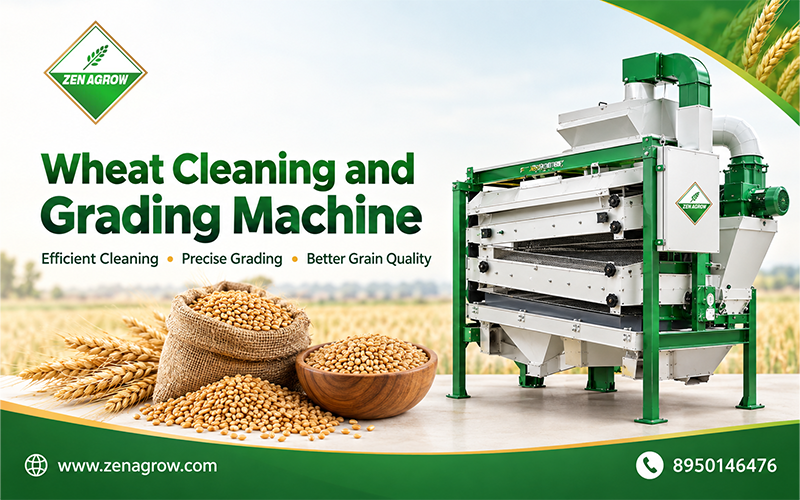
Wheat is one of the most important cereal crops used for food, flour production, animal feed, and seed purposes. After harvesting and threshing, wheat grains usually contain different types of unwanted materials such as dust, chaff, straw particles, weed seeds, stones, broken grains, and other foreign matter. Before wheat can be stored, processed, milled, or marketed, it needs proper cleaning and grading.A wheat cleaning and grading machine is designed to improve the quality and uniformity of wheat by separating unwanted impurities and sorting grains according to their physical characteristics. Modern cleaning and grading equipment can combine screening, aspiration, and other separation principles to create a more consistent grain-processing operation.
According to FAO material on wheat post-harvest handling, cleaning is an important step before further processing, while modern mechanical cleaning equipment can make the operation more efficient than manual winnowing.
What Is a Wheat Cleaning and Grading Machine?
A wheat cleaning and grading machine is agricultural processing equipment used to remove unwanted materials from harvested wheat and separate the grain into more uniform fractions.
The cleaning section primarily focuses on removing impurities. Depending on the machine design, these may include:
- Dust and fine particles
- Wheat chaff
- Straw and plant residue
- Weed seeds
- Stones and heavier impurities
- Broken or undersized grains
- Other foreign materials
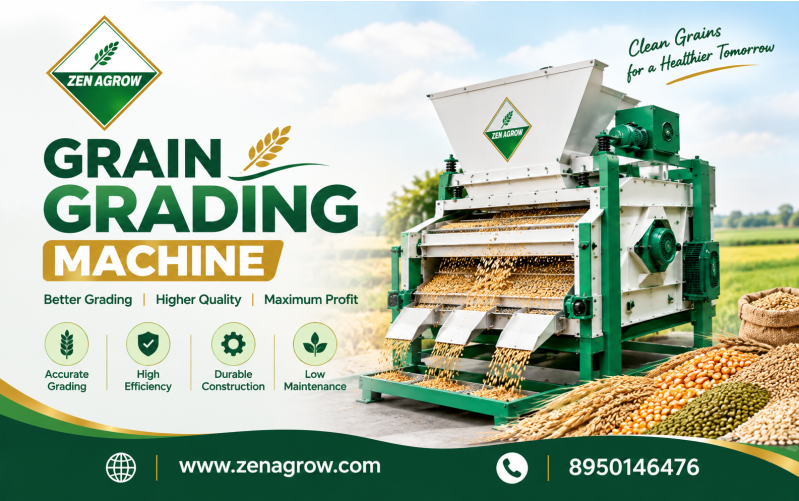
The grading section focuses on separating wheat according to characteristics such as size, thickness, weight, or other physical properties.
FAO defines grading more broadly as sorting agricultural produce into distinct, uniform lots according to predetermined quality characteristics such as size, shape, color, weight, and maturity.
Why Wheat Cleaning Is Important Before Processing
Wheat arriving directly from harvesting operations is rarely ready for every downstream application. Field and harvesting conditions can introduce various impurities into the grain stream.
If these materials are not removed, they can affect storage, transportation, milling, and the overall quality of the processed wheat.
A proper cleaning operation can help:
- Remove unwanted foreign material
- Improve the physical cleanliness of wheat
- Reduce the amount of impurities entering downstream equipment
- Prepare wheat for milling or further processing
- Improve the consistency of grain lots
- Support better handling and storage practices
Research indexed through FAO AGRIS has also examined wheat cleaning and separation systems for removing materials other than grain, including chaff and immature grain.
Cleaning is particularly important in commercial wheat processing because impurities can place additional loads on subsequent machinery.
How Does a Wheat Cleaning and Grading Machine Work?
The exact working process depends on the machine configuration, but a typical system uses controlled feeding, screening, air separation, and grading.
1. Wheat Feeding
The wheat is introduced into the machine through a hopper or feeding arrangement. Consistent feeding is important because excessive or uneven material flow can affect separation performance.
The objective is to distribute wheat properly across the cleaning and grading sections.
2. Initial Screening
Screening is commonly used to separate particles according to size.
Different screen openings allow smaller particles and unwanted materials to pass through while retaining wheat grains of the required size.
Depending on the screen arrangement, this stage can help separate:
- Fine dust and small particles
- Oversized foreign materials
- Broken or undersized grains
- Other size-based impurities
3. Air Aspiration
Air separation can be used to remove lightweight materials from the grain stream.
The airflow carries lighter materials such as chaff, dust, husks, and some plant residues away from the heavier wheat grains.
The effectiveness of air separation depends on factors such as airflow, material characteristics, feed rate, and machine design.
4. Grading and Separation
After cleaning, wheat can be separated into different fractions based on physical properties.
The grading method depends on the equipment used and the requirements of the processing plant.
For example, grading may help separate wheat into fractions according to grain size or thickness.
5. Clean Wheat Discharge
After passing through the required cleaning and grading stages, the processed wheat is discharged through designated outlets.
Different outlets may be used for cleaned wheat, screenings, lightweight impurities, and other separated materials.
Main Components of a Wheat Cleaning Machine
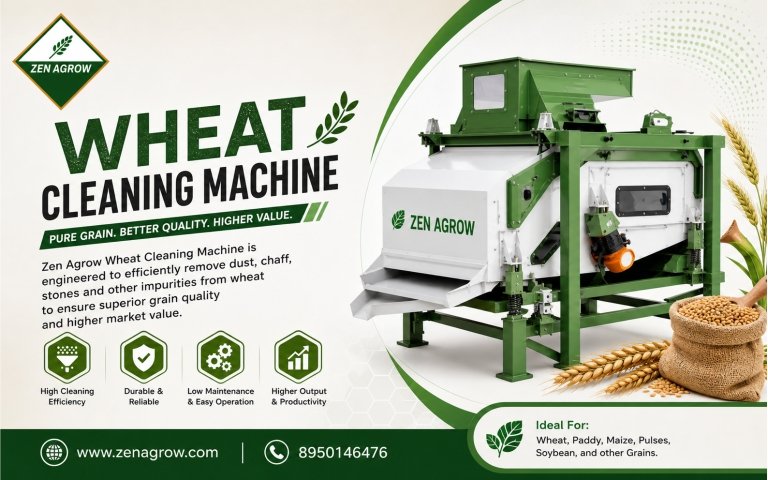
The design of a Wheat Cleaning Machine can vary depending on capacity and application. However, several components are commonly found in grain cleaning systems.
Feed Hopper
The feed hopper receives incoming wheat and helps control the flow of material into the machine.
Screens
Screens are used for size-based separation. The selection of screen openings is important because wheat varieties and processing requirements can differ.
Air Blower or Aspiration System
An aspiration system creates airflow for separating lightweight impurities from heavier wheat grains.
Cleaning Chamber
The cleaning chamber provides the working area where screening and/or air separation takes place.
Grading Section
The grading section separates wheat into desired fractions based on the machine’s separation principle.
Discharge Outlets
Separate discharge points allow different fractions and impurities to leave the machine.
Drive and Control System
Motors, drive mechanisms, and control systems operate the machine and allow operators to manage the processing conditions according to the equipment design.
Key Impurities Removed During Wheat Cleaning
A wheat cleaning and grading system can be configured to deal with several types of impurities.
Common materials found in harvested wheat include:
- Dust
- Chaff
- Straw
- Weed seeds
- Small stones
- Soil particles
- Broken grains
- Lightweight plant material
- Oversized foreign particles
- Undersized grain fractions
The actual separation capability depends on the machine configuration, screen selection, airflow, wheat condition, and other operating parameters.
This is why machine selection should be based on the actual raw material rather than capacity alone.
Difference Between Wheat Cleaning and Wheat Grading
Although cleaning and grading are often discussed together, they have different purposes.
Wheat cleaning focuses mainly on removing unwanted materials from the wheat.
Wheat grading focuses on sorting the cleaned grain into more uniform categories or fractions.
For example, a cleaning stage may remove dust, chaff, and stones, while a grading stage may separate wheat according to grain size.
Combining both operations can provide a more complete processing solution for businesses that require cleaned and more consistently sized wheat.
Benefits of Using a Wheat Cleaning and Grading Machine
Investing in appropriate grain-processing equipment can provide several operational advantages.
Improved Grain Cleanliness
Mechanical cleaning can provide a more systematic approach to impurity removal than manual methods.
Better Processing Preparation
Cleaned wheat is better prepared for subsequent operations such as storage, milling, packaging, or further grain processing.
FAO’s wheat processing flow places grain cleaning before later stages such as milling, highlighting its role within the overall processing sequence.
Consistent Grain Separation
A grading section can help create more uniform fractions according to the separation criteria used by the machine.
Reduced Manual Work
Mechanical systems can reduce the amount of repetitive manual cleaning and sorting required.
Better Process Control
Modern equipment allows operators to control factors such as feeding, airflow, and screening according to the machine design and material requirements.
Suitable for Commercial Processing
Depending on the configuration, wheat cleaning and grading equipment can be incorporated into processing plants handling different production volumes.
Important Factors When Choosing a Wheat Cleaning and Grading Machine
Choosing equipment only by looking at its advertised capacity may not be enough. Several factors should be considered before purchasing.
Wheat Type and Quality
Different wheat varieties can have different physical characteristics. The incoming wheat may also vary in moisture, impurity level, grain size, and percentage of broken grains.
Required Capacity
The machine should be selected according to the required processing capacity.
Businesses should consider both current production requirements and potential future expansion.
Type of Impurities
Identify the impurities that need to be removed before selecting the appropriate cleaning arrangement.
For example, removing lightweight chaff requires a different separation principle from removing stones or other heavy materials.
Grading Requirement
Determine whether the requirement is simply cleaning or whether the processed wheat also needs size-based or other grading.
Space Availability
The complete installation should fit within the available plant area while allowing adequate space for operation, inspection, maintenance, and material movement.
Energy Requirements
Consider the motors, blowers, drives, and other electrical requirements of the complete system.
Maintenance
A machine with accessible components and straightforward maintenance requirements can make routine servicing easier.
Factors That Affect Wheat Cleaning Efficiency
The performance of a wheat cleaning system depends on several operating conditions.
Important factors include:
- Feed rate
- Screen selection
- Screen condition
- Airflow
- Wheat moisture
- Impurity level
- Grain size
- Machine adjustment
- Material distribution
- Maintenance condition
Research on small-scale wheat cleaning equipment has demonstrated that variables such as feed rate, sieve slope, reciprocating speed, and air velocity can influence cleaning performance.
Therefore, operators should follow the manufacturer’s recommended operating conditions instead of assuming that maximum airflow or maximum feed rate will always provide better results.
Applications of Wheat Cleaning and Grading Equipment
A wheat cleaning and grading machine can be useful in several agricultural and food-processing applications.
Flour Mills
Wheat generally requires cleaning before entering the milling process. A suitable cleaning system can form part of the wheat preparation line.
Grain Processing Plants
Commercial grain processors can use cleaning and grading systems to prepare wheat for further processing or distribution.
Seed Processing
Where wheat is intended for seed purposes, cleaning and separation can be part of the broader seed-processing workflow.
Agricultural Businesses
Large farms and agricultural businesses may use grain cleaning equipment to improve the handling and preparation of harvested wheat.
Grain Traders and Storage Facilities
Cleaning can help prepare grain lots for storage, handling, or commercial movement.
FAO materials describe cleaning, grading, and storage as important activities within grain handling and processing systems.
Wheat Cleaning Machine Maintenance Tips
Regular maintenance is important for maintaining consistent machine operation.
Some basic maintenance practices include:
- Clean the machine regularly after operation.
- Inspect screens for damage or blockage.
- Check belts and moving components.
- Inspect bearings according to the manufacturer’s recommendations.
- Keep air passages free from excessive dust accumulation.
- Check blower and aspiration components.
- Inspect electrical connections.
- Tighten loose fasteners when required.
- Replace worn components promptly.
- Follow the manufacturer’s maintenance schedule.
Regular inspection can also help identify changes in machine performance before they develop into larger operational problems.
Common Mistakes to Avoid When Using a Wheat Cleaning Machine
Even a properly designed machine may not deliver the desired result if it is incorrectly operated.
Overfeeding the Machine
Excessive feed can reduce the separation opportunity and may cause impurities to remain with the cleaned grain.
Using Incorrect Screens
Screens should match the material and intended separation requirement.
Ignoring Airflow Adjustment
Too little or too much airflow can affect pneumatic separation.
Neglecting Maintenance
Worn screens, blocked air passages, loose components, and poor mechanical condition can affect performance.
Selecting Equipment Only by Capacity
A machine’s capacity should not be considered separately from the required cleaning quality, impurity type, grain characteristics, and plant configuration.
Wheat Cleaning and Grading Machine Selection Checklist
Before purchasing equipment, businesses can review the following checklist:
- Identify the type of wheat to be processed.
- Estimate the required hourly capacity.
- Analyze the level and type of impurities.
- Determine whether cleaning alone is sufficient.
- Define the required grading criteria.
- Check available installation space.
- Review electrical and power requirements.
- Ask about screen options.
- Understand airflow and aspiration requirements.
- Discuss maintenance requirements.
- Confirm the complete processing flow.
- Ask the manufacturer about customization options.
- Consider future production requirements.
This approach can help businesses choose equipment based on actual processing needs rather than relying only on general specifications.
Frequently Asked Questions About Wheat Cleaning and Grading Machine
What is a wheat cleaning and grading machine?
A wheat cleaning and grading machine is equipment designed to remove unwanted impurities from wheat and separate the grain into more uniform fractions according to the machine’s grading principle.
What impurities can a Wheat Cleaning Machine remove?
Depending on its configuration, a Wheat Cleaning Machine can help remove dust, chaff, straw particles, weed seeds, stones, broken grains, and other foreign materials.
Why is wheat cleaning important before milling?
Cleaning helps remove unwanted materials before wheat enters subsequent processing stages. It can therefore help prepare the raw material for milling and other operations. FAO’s wheat-processing flow identifies grain cleaning as a stage before milling.
What is the difference between wheat cleaning and grading?
Cleaning primarily removes unwanted materials, while grading separates the grain into fractions according to characteristics such as size or other physical properties.
Can one machine clean and grade wheat?
Yes, some processing systems combine cleaning and grading functions. The exact configuration depends on the required separation process, capacity, and raw material characteristics.
How do I select the right wheat cleaning machine?
Consider the wheat type, capacity, impurity level, required cleaning quality, grading requirements, available space, power requirements, and overall processing flow before selecting equipment.
Does feed rate affect wheat cleaning performance?
Yes. Feed rate can influence separation performance because the quantity of material passing through the cleaning section affects how effectively impurities can be separated. Research on wheat cleaning equipment has evaluated feed rate alongside sieve and airflow parameters.
How often should a wheat cleaning machine be maintained?
Maintenance frequency depends on operating hours, material conditions, machine design, and manufacturer recommendations. Regular cleaning, inspection, and servicing should be part of normal operation.
Conclusion: Choosing the Right Wheat Cleaning and Grading Machine
A wheat cleaning and grading machine is an important solution for businesses looking to improve the handling and preparation of wheat. Cleaning helps separate unwanted materials such as dust, chaff, stones, and other foreign matter, while grading can help create more uniform grain fractions. For additional information on grain quality and post-harvest processing, refer to the Food and Agriculture Organization (FAO).
The effectiveness of a Wheat Cleaning Machine depends not only on machine design but also on correct screen selection, feed rate, airflow, material characteristics, and regular maintenance. For this reason, businesses should evaluate their specific processing requirements before choosing equipment.

 English