- Plot No. 453-454, HSIIDC, Industrial Area, Saha, Haryana 133104

Seed Grading Equipment

Wheat Cleaning and Grading Machine
September 21, 2026
gehu grading machine
September 28, 2026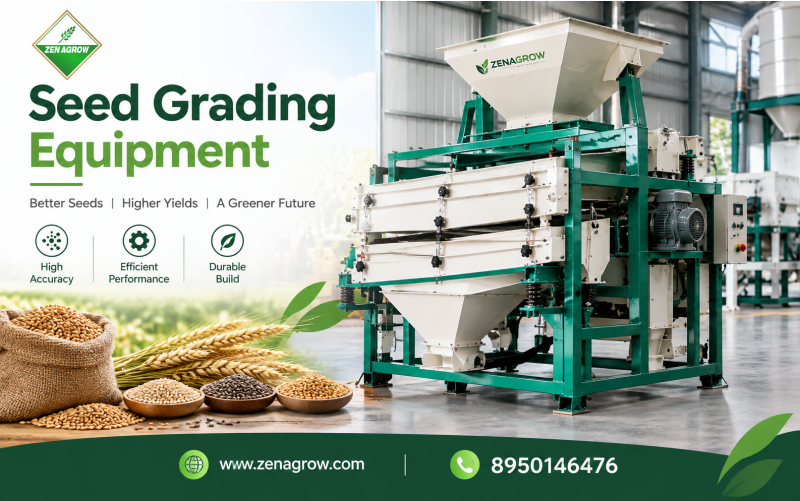
Good seed quality is important for modern farming and seed processing. After harvesting, seeds often have different sizes, shapes, weights, and quality levels. A seed lot may also contain small seeds, large seeds, broken seeds, dust, chaff, and other unwanted material.Seed grading equipment helps separate seeds into different grades. The machine can sort seeds based on size, thickness, length, weight, density, or shape. As a result, businesses can produce more uniform seed lots for further processing, packaging, storage, or use.
For seed processors and agricultural businesses, choosing the right grading machine is an important step. A suitable machine can reduce manual work and support a smooth processing operation.
What Is Seed Grading Equipment?
Seed grading equipment is machinery used to separate seeds according to their physical properties. The main purpose is to divide a mixed seed lot into more uniform grades.
For example, a screen-based grader can separate smaller seeds from larger seeds. Different screen openings allow the operator to create separate seed fractions. Similarly, other machines can separate seeds by length, weight, or density.
Common seed grading methods include:
- Screen grading
- Vibratory grading
- Air separation
- Length-based separation
- Gravity separation
- Colour-based sorting
Each method has a different purpose. Therefore, the right machine should be selected according to the crop and processing requirement.
Why Is Seed Grading Important?
Seeds from the same crop are not always equal in size or quality. Some seeds may be larger, while others may be smaller or lighter. This natural variation can affect handling and further processing.
Seed grading helps divide these materials into suitable groups. Therefore, it can improve the uniformity of the final seed lot.
The main benefits of seed grading include:
- Better seed size uniformity
- Easier seed handling
- Less manual sorting
- More consistent processing
- Better packaging control
- Production of different seed grades
- Improved processing efficiency
- Better material management
In addition, grading can be combined with other processing operations. A complete seed-processing line may include cleaning, grading, separating, treating, weighing, and packaging.
How Does Seed Grading Equipment Work?
The working method depends on the type of grading machine. Generally, the seed enters the machine through a controlled feeding system. It then moves through a grading section where separation takes place.
For instance, a screen grader uses screens with selected openings. Smaller seeds can pass through the openings. Larger seeds remain on the screen and move toward another outlet.
On the other hand, an indented cylinder separates seeds according to length. A gravity separator uses differences in density to separate lighter and heavier material.
A typical seed-processing flow may look like this:
Raw Seed → Pre-Cleaning → Cleaning → Grading → Quality Checking → Packaging → Storage
However, every processing plant does not need the same setup. The required machines depend on the crop, raw material, production capacity, and final product.
Types of Seed Grading Equipment
Different crops require different grading methods. Therefore, businesses should understand the available types of grading equipment before selecting a machine.
Air Screen Cleaner and Grader
An air screen cleaner and grader uses airflow and screens to separate seed material. First, airflow can remove light material such as dust and chaff. Next, screens separate the remaining material according to size.
This type of equipment can be used for:
- Wheat
- Rice
- Maize
- Pulses
- Mustard
- Soybean
- Other agricultural seeds
The final result depends on the screen size, airflow, feeding rate, and condition of the seed.
Indented Cylinder Grader
An indented cylinder grader is mainly used for length-based separation. The rotating cylinder has small indentations. These indentations pick up particles of a suitable length as the cylinder rotates.
Meanwhile, particles with a different length follow another path. Therefore, an indented cylinder can be useful when seed materials have similar widths but different lengths.
This machine can be added to a larger seed-processing line when length separation is required.
Gravity Separator
A gravity separator works on differences in density. Airflow and deck movement help separate heavy and light seed material.
For example, well-developed seeds may be heavier than poorly developed seeds. As a result, the machine can separate different fractions based on their density.
Gravity separators may be useful for:
- Heavy seeds
- Light seeds
- Poorly developed seeds
- Less dense seed fractions
- Other materials with density differences
However, correct machine settings are important. Airflow, feeding rate, deck settings, and seed condition can all affect the result.
Vibratory Grader
A vibratory grader uses controlled vibration to move seeds across a screening surface. The movement keeps the seed flowing through the machine.
At the same time, smaller particles can pass through suitable screen openings. Larger particles continue toward another outlet.
Vibratory grading can be used for different agricultural processing applications. In addition, screen sizes and machine settings can be selected according to the material.
Colour Sorting Equipment
Colour sorting equipment uses optical technology to identify visible differences in the material. The machine can detect seeds or particles that have a different colour or appearance.
Therefore, colour sorting can be useful when unwanted material cannot be separated easily through size or density.
Seed Grading Equipment for Different Crops
Each crop has its own physical characteristics. Wheat, rice, maize, pulses, mustard, soybean, and vegetable seeds can have different sizes, shapes, weights, and densities.
Because of these differences, one grading setup may not work in the same way for every crop.
Common applications include:
- Wheat seed grading
- Rice seed grading
- Maize seed grading
- Pulses grading
- Mustard seed grading
- Soybean grading
- Oilseed grading
- Vegetable seed grading
Before buying equipment, businesses should understand the physical properties of their seed material. This step helps in selecting a suitable grading method.
Main Benefits of Seed Grading Equipment
Modern seed grading equipment can provide several benefits for agricultural and seed-processing businesses.
Better Seed Uniformity
Grading separates seeds into more consistent groups. Therefore, each grade can be handled and processed more easily.
Reduced Manual Work
Manual sorting can take significant time when processing large quantities. Mechanical grading can reduce this work and provide a more continuous process.
Improved Processing Efficiency
A properly selected machine can maintain a steady material flow. Consequently, businesses can organize their processing operations more efficiently.
Multiple Seed Grades
Some grading machines can create several grades from one seed lot. This feature is useful when different seed sizes are required.
Easier Packaging
Uniform seed grades can make weighing and packaging simpler. Moreover, consistent material can make storage and handling more organized.
Flexible Processing
Many machines allow operators to change screens or adjust operating settings. Therefore, the same machine may be used for different requirements when correctly configured.
Important Factors to Consider Before Buying Seed Grading Equipment
Choosing a grading machine requires careful planning. The cheapest machine is not always suitable for every application.
Instead, businesses should consider:
- Crop type
- Seed size
- Seed shape
- Seed length
- Seed density
- Required capacity
- Number of grades
- Screen size
- Feeding system
- Airflow requirements
- Power requirements
- Machine construction
- Maintenance needs
- Available installation space
- Future production requirements
For example, a small seed-processing unit may need a compact grader. In contrast, a large commercial plant may require a high-capacity machine with several processing stages.
How to Choose the Right Seed Grading Machine
Selecting the correct machine starts with understanding the processing requirement.
Identify the Crop
First, identify the crop or seed variety that will be processed. Different crops have different physical properties. Therefore, the machine should be selected according to the material.
Check the Required Capacity
Next, calculate how much material needs to be processed per hour. This information helps determine the required machine capacity.
Understand Seed Characteristics
Seed size, shape, length, weight, and density should be considered. These factors help determine the most suitable separation method.
Decide the Number of Grades
Determine how many final grades are required. A two-grade system may have different requirements from a system producing three or more grades.
Check Existing Equipment
If the business already has a seed cleaner, elevator, conveyor, or other machinery, the new grader should fit into the existing processing line.
Consider Maintenance
Finally, check whether the machine is easy to clean and maintain. Easy access to screens, bearings, belts, and other parts can make routine maintenance simpler.
Seed Cleaning and Seed Grading: What Is the Difference?
Seed cleaning and seed grading are related processes. However, they have different purposes.
Seed cleaning mainly removes unwanted material from the seed lot. These materials can include:
- Dust
- Chaff
- Stones
- Plant debris
- Weed seeds
- Foreign particles
- Lightweight impurities
Seed grading, however, focuses on separating the seed material into different grades. The separation may be based on:
- Size
- Thickness
- Length
- Weight
- Density
- Shape
For this reason, cleaning and grading are often used together. A cleaning machine can first remove unwanted material. After that, grading equipment can divide the cleaned seeds into different grades.
Factors That Affect Seed Grading Performance
Several factors can affect the performance of grading equipment. Therefore, operators should monitor the machine during processing.
Important factors include:
- Seed moisture
- Seed size variation
- Seed shape
- Feeding rate
- Screen selection
- Airflow
- Machine settings
- Screen condition
- Machine cleanliness
- Incoming material quality
For example, feeding too much material at once can reduce separation quality. Similarly, blocked screens can affect material flow.
Proper machine adjustment is therefore important for achieving consistent results.
Maintenance Tips for Seed Grading Equipment
Regular maintenance helps keep grading machinery in good working condition. It can also reduce unexpected downtime.
Follow these simple maintenance practices:
- Clean the machine after processing.
- Remove leftover seed material.
- Check screens for blockages.
- Inspect screens for damage.
- Check belts and moving parts.
- Inspect bearings and lubrication points.
- Check electrical connections.
- Inspect airflow components.
- Tighten loose components when needed.
- Replace worn parts as recommended by the manufacturer.
In particular, screen maintenance should not be ignored. A blocked or damaged screen can affect grading accuracy and machine capacity.
Best Practices for Efficient Seed Grading
Good machine operation is just as important as selecting the right equipment. Therefore, operators should follow a consistent process.
Follow these useful practices:
- Clean the seed before grading when required.
- Select the correct screens for the crop.
- Maintain a steady feeding rate.
- Avoid overloading the machine.
- Adjust airflow according to the material.
- Check each discharged grade.
- Keep screens clean.
- Inspect the machine regularly.
- Reduce unnecessary material handling.
- Follow the manufacturer’s operating instructions.
As a result, proper operation can help maintain consistent machine performance.
Role of Agricultural Machinery Manufacturers in Seed Processing
Experienced agricultural machinery manufacturers can help businesses choose equipment for different seed-processing needs.
A complete processing line may include:
- Pre-cleaner
- Seed cleaner
- Air-screen cleaner
- Seed grader
- Indented cylinder
- Gravity separator
- Destoner
- Bucket elevator
- Conveyors
- Other material-handling equipment
However, every business does not require all of these machines. The correct combination depends on the crop, raw material, capacity, and desired final product.
Before purchasing equipment, businesses should discuss their requirements with agricultural machinery manufacturers.
Important information includes:
- Crop type
- Seed variety
- Required capacity
- Raw material condition
- Desired grades
- Existing machinery
- Available space
- Power availability
- Automation requirements
- Future production plans
Providing these details makes it easier to plan a suitable processing system.
Why Machine Capacity Matters
Machine capacity is an important factor when purchasing seed grading equipment. A machine with low capacity may not meet production requirements. On the other hand, an unnecessarily large machine may increase the initial investment.
Therefore, businesses should consider both current and future requirements.
Important points include:
- Hourly production
- Daily production
- Seasonal processing volume
- Future production growth
- Feeding arrangements
- Discharge arrangements
- Capacity of connected machines
A balanced processing line helps prevent one machine from slowing down the complete operation.
Applications of Seed Grading Equipment
Seed grading equipment can be used in many agricultural and commercial applications.
Some common applications include:
- Commercial seed processing
- Agricultural seed preparation
- Grain processing
- Pulses processing
- Oilseed processing
- Seed packaging
- Seed trading
- Agricultural processing plants
- Seed treatment and processing lines
The machine configuration should always be selected according to the material and the required output.
Frequently Asked Questions About Seed Grading Equipment
What is seed grading equipment?
Seed grading equipment is machinery used to separate seeds into different grades based on physical characteristics such as size, thickness, length, weight, density, or shape.
Why is seed grading important?
Seed grading helps create more uniform seed fractions. It can also reduce manual sorting and support a more efficient processing operation.
What are the common types of seed grading equipment?
Common types include air-screen graders, vibratory graders, indented cylinder graders, gravity separators, and colour sorting equipment.
Can seed grading equipment process different crops?
Yes, some machines can process different crops. However, screens, airflow, and other settings may need to be changed according to the crop.
What is the difference between seed cleaning and seed grading?
Seed cleaning mainly removes unwanted material from the seed lot. Seed grading, however, separates the seed into different grades according to physical properties.
How do I select the right seed grading equipment?
Consider the crop, seed characteristics, required capacity, number of grades, desired separation, available space, power requirements, and existing processing equipment.
Why is screen selection important?
Screen selection affects the size-based separation process. The correct screen helps produce the required grades and can reduce unwanted loss of usable seed.
Can a seed grader be used in a complete processing plant?
Yes. A grader can be combined with cleaners, destoners, gravity separators, elevators, conveyors, and other agricultural processing machines.
What information should I provide to agricultural machinery manufacturers?
Provide information about the crop, seed condition, required capacity, desired grades, existing machinery, available space, power supply, and complete processing requirements.
Conclusion
Seed grading equipment is an important part of modern seed-processing operations. It helps separate seeds according to size, thickness, length, weight, density, and other physical characteristics.
A suitable grading machine can improve seed uniformity and reduce manual sorting. In addition, it can support smoother processing, handling, and packaging operations.
However, the right equipment depends on several factors. Crop type, seed characteristics, capacity, number of grades, machine configuration, and processing requirements should all be considered before making a purchase.
For this reason, businesses should discuss their requirements with experienced agricultural machinery manufacturers before selecting equipment. A properly planned processing line can provide better control over seed handling and grading.
Zenagrow provides agricultural machinery solutions for different processing requirements. To learn more about agricultural machinery and seed-processing equipment, visit:

 English