- Plot No. 453-454, HSIIDC, Industrial Area, Saha, Haryana 133104

Wheat Seed Cleaning Machine

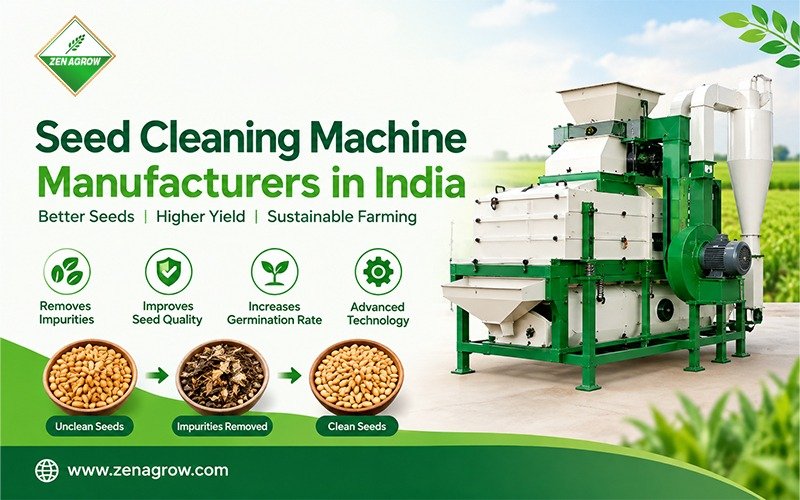
Seed Cleaning Machine Manufacturers in India
October 9, 2026
Agriculture Machinery Companies
October 19, 2026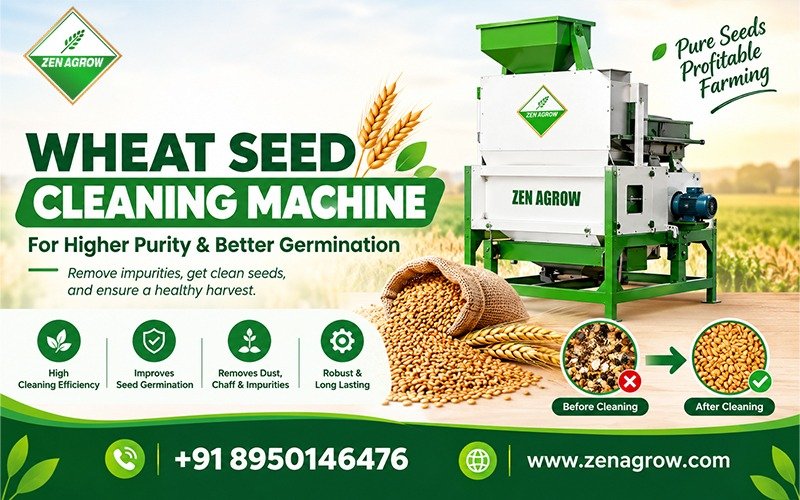
Wheat Seed Cleaning Machine: Benefits, Working Process, and Uses
A wheat seed cleaning machine is an essential piece of equipment for removing unwanted materials from harvested wheat and preparing seeds for storage, grading, and further processing. Agricultural machinery manufacturers develop cleaning solutions that help farmers, seed processors, grain traders, and agricultural businesses handle wheat more efficiently. By separating dust, chaff, straw, weed seeds, and other impurities, a suitable machine can improve the cleanliness and consistency of wheat seed lots while supporting better material handling.
Zenagrow: Agricultural Machinery Solutions for Wheat Seed Cleaning
Zenagrow provides agricultural machinery solutions designed for grain cleaning, seed processing, and grading applications. Based in Saha, Haryana, the company serves businesses looking for practical equipment for agricultural processing operations.
Selecting the right wheat seed cleaning equipment depends on the quantity of grain to be processed, the type of impurities present, the required cleaning quality, and the available production space. Zenagrow’s range of agricultural machinery includes solutions related to seed cleaning, grain separation, and grading. Businesses can explore the Seed Cleaning Machine range to understand equipment options for removing unwanted materials from seed lots.
For agricultural businesses planning to upgrade their processing facilities, suitable machinery can help organize cleaning operations, reduce unnecessary manual handling, and prepare wheat for subsequent processing stages.
What Is a Wheat Seed Cleaning Machine?
A wheat seed cleaning machine is equipment used to separate wheat seeds from foreign materials and unwanted particles. Harvested wheat often contains a mixture of clean grains, broken kernels, dust, dry leaves, straw, weed seeds, and other impurities. These materials may enter the crop during harvesting, transportation, or storage.
The machine uses separation methods such as screening, airflow, vibration, or a combination of these techniques to remove impurities. The exact process depends on the machine’s design and the characteristics of the material being processed.
Wheat seed cleaning is particularly important for seed processors who prepare wheat for sowing. Clean seed lots are easier to handle, inspect, store, and grade. However, physical cleaning alone does not guarantee seed germination, genetic purity, or freedom from seed-borne diseases. These qualities require appropriate testing and, where necessary, additional seed-processing treatments.
Why Is Wheat Seed Cleaning Important?
Cleaning wheat seeds is an important step in agricultural processing because harvested grain rarely arrives completely free of foreign matter. Effective cleaning helps prepare the material for its intended use.
1. Removes Dust and Lightweight Impurities
Wheat may contain dust, chaff, husk fragments, and other lightweight materials. Air-based separation systems can help remove these impurities by using controlled airflow to carry lighter particles away from heavier grain.
Removing excess dust and chaff helps produce a cleaner output and makes subsequent handling more convenient.
2. Separates Weed Seeds and Foreign Materials
Weed seeds and other unwanted particles can enter wheat during harvesting and threshing. Depending on their size and physical characteristics, screens and other separation mechanisms can help remove some of these materials.
The effectiveness of separation depends on the difference between wheat kernels and the impurities. Some contaminants may require additional cleaning stages.
3. Supports Better Seed Processing
Seed processors often need to prepare wheat before grading, treatment, packaging, or storage. Cleaning reduces the amount of foreign material entering later stages and can help machinery operate more consistently.
A well-planned cleaning process also makes it easier to inspect the grain and identify lots that require further processing.
4. Helps Improve Storage Preparation
Excess foreign matter can complicate grain handling and storage. Removing unwanted material is one part of preparing wheat for storage, although proper moisture management, pest control, ventilation, and storage hygiene are also necessary.
Cleaning does not replace appropriate grain-drying and storage practices.
5. Reduces Unnecessary Manual Handling
Manual removal of impurities can be slow when large quantities of wheat need processing. A properly selected wheat seed cleaning machine can handle continuous or batch operations, depending on its design, reducing the need for repeated manual sorting.
How Does a Wheat Seed Cleaning Machine Work?
The working process varies by model, but most cleaning systems follow several basic stages.
Step 1: Feeding the Wheat Seeds
Raw wheat is supplied to the machine through a hopper or feeding arrangement. Consistent feeding helps distribute the material evenly across the cleaning section.
Overloading the machine can reduce separation efficiency, while irregular feeding may cause inconsistent results. Operators should follow the manufacturer’s recommended feed rate.
Step 2: Removing Dust Through Airflow
Some wheat cleaning machines use an aspiration system to remove dust, chaff, and other lightweight impurities. Air passes through the grain stream and carries lighter particles toward a collection system.
Airflow must be adjusted according to the grain variety, moisture condition, and quantity of lightweight material. Excessive airflow may carry away good kernels along with unwanted particles.
Step 3: Screening the Wheat
Screens separate materials according to differences in size and thickness. Wheat kernels pass through or over selected screen openings, while particles that are too large or too small are directed into separate outlets.
The screen configuration depends on the size of the wheat kernels and the types of impurities present. Correct screen selection is essential for achieving the desired cleaning result.
Step 4: Separating the Cleaned Material
After screening and aspiration, cleaned wheat is collected through an outlet. Depending on the equipment, impurities may be discharged through separate outlets for easier collection and disposal.
Some systems use multiple cleaning stages to improve results when the incoming grain contains a high proportion of foreign material.
Step 5: Inspecting the Final Output
Operators should inspect the cleaned wheat to check for remaining impurities, damaged kernels, and unnecessary grain loss. If the results are unsatisfactory, adjustments to feed rate, airflow, or screen selection may be required.
Regular sampling provides a more reliable assessment than judging cleaning quality from appearance alone.
Main Types of Wheat Seed Cleaning Machines
Different agricultural operations require different cleaning arrangements. The best option depends on the volume of wheat, the desired level of cleanliness, and the available budget.
1. Air Screen Cleaner
An air screen cleaner combines airflow with screening to separate lightweight impurities and particles of different sizes. This arrangement is commonly considered when a single machine needs to perform more than one cleaning function.
It can be useful for seed processors and grain-handling businesses that need to prepare wheat before grading or packaging.
2. Vibratory Seed Cleaner
A vibratory cleaner uses controlled vibration to move grain across one or more screens. The movement helps distribute wheat evenly and supports the separation of particles according to size.
Screen selection and vibration settings should match the grain being processed. Incorrect settings can affect output quality and increase grain loss.
3. Pre-Cleaner for Wheat
A pre-cleaner removes a substantial portion of coarse and lightweight impurities before wheat enters more precise processing equipment. This can reduce the burden on downstream machinery.
Pre-cleaning is useful in facilities handling wheat directly from harvesting, threshing, or bulk grain collection.
4. Combined Wheat Cleaning and Grading System
A combined system performs cleaning and grading as separate but connected operations. Cleaning focuses on removing unwanted materials, while grading separates acceptable grain into groups according to selected characteristics.
Businesses can explore Zenagrow’s Wheat Cleaning and Grading Machine page for equipment related to these processing requirements.
5. Gravity Separation Equipment
Gravity separation equipment distinguishes particles based on differences in density and aerodynamic behaviour under controlled operating conditions. It can help separate certain heavy impurities or distinguish between grain fractions when the material properties allow effective separation.
Gravity separation is not a replacement for every cleaning method. It is most appropriate when the target materials have suitable physical differences and the machine is configured for the application.
Important Features to Consider When Buying a Wheat Seed Cleaning Machine
Choosing agricultural processing equipment requires more than comparing prices. Buyers should assess machine performance, operating requirements, and the needs of their facility.
Processing Capacity
Determine how many kilograms or tonnes of wheat must be processed per hour. Select a machine that can handle the expected workload without requiring constant overloading.
Actual capacity may vary with wheat variety, moisture, impurity content, and the required cleaning standard.
Cleaning Efficiency
Ask the manufacturer how the machine performs under conditions similar to your operation. Request a demonstration using representative wheat samples when possible.
Cleaning efficiency should be considered alongside good-seed recovery. A machine that removes impurities but also discards excessive healthy wheat may not be suitable.
Screen Configuration
Screen size and arrangement affect which materials can be separated. Check whether suitable screens are available for the wheat varieties and impurity profiles handled by your business.
Power Consumption
Review motor ratings, electrical requirements, and expected operating hours. Consider total running costs rather than evaluating machinery solely on its purchase price.
Construction and Maintenance
Inspect the frame, screens, bearings, moving parts, and access panels. A practical design should allow routine inspection, cleaning, and replacement of wear parts.
Installation and After-Sales Support
Confirm installation requirements, operator training, spare-part availability, and the manufacturer’s service arrangements before purchasing.
Space and Material Flow
Measure the installation area and plan how wheat will enter the machine and leave the cleaned-material outlets. Consider elevators, conveyors, storage bins, and dust-collection arrangements if required.
Wheat Seed Cleaning Machine Applications
A wheat seed cleaning machine can serve different agricultural and commercial operations.
- Seed processing units: Prepare wheat seed lots for grading, testing, treatment, and packaging.
- Grain traders: Remove foreign materials before further handling or sale.
- Agricultural cooperatives: Process wheat collected from multiple farmers.
- Grain storage facilities: Prepare incoming wheat for appropriate storage procedures.
- Flour mills: Remove impurities before wheat enters further cleaning and milling stages.
- Agricultural machinery plants: Integrate cleaning equipment into larger grain-processing lines.
- Farming businesses: Clean wheat intended for specific on-farm seed or grain-handling requirements, subject to suitable equipment capacity.
The required cleaning standard differs between wheat intended for milling, commercial grain handling, and planting. Buyers should define the intended use before selecting a machine.
Difference Between Wheat Seed Cleaning and Wheat Seed Grading
Cleaning and grading are related operations, but they serve different purposes.
Wheat seed cleaning removes unwanted materials such as dust, chaff, straw, weed seeds, and other foreign particles. Grading separates the cleaned material into groups based on characteristics such as size, thickness, weight, or other measurable properties.
For example, a seed processor may first remove dust and foreign matter, then use grading equipment to obtain more uniform seed fractions.
Zenagrow provides information about its Grain Separator Machine and Grain Grading Machine solutions. These related resources can help businesses understand the difference between separating impurities and classifying grain.
For wheat-processing operations that need more uniform fractions, a Gehu Grading Machine may also be relevant.
How to Maintain a Wheat Seed Cleaning Machine
Regular maintenance helps preserve cleaning performance and reduce unexpected interruptions.
Clean the Machine After Use
Remove accumulated dust, chaff, and grain residues from accessible sections. Follow the manufacturer’s safety instructions before opening covers or entering maintenance areas.
Inspect Screens Regularly
Check screens for damage, blockages, loose fasteners, and wear. Damaged screens may allow unwanted particles into the cleaned output or cause unnecessary grain loss.
Check Moving Components
Inspect belts, bearings, motors, vibration mechanisms, and other moving components according to the maintenance schedule. Replace worn parts before they affect operation.
Monitor Airflow and Dust Collection
Where aspiration is used, check air passages, filters, ducts, and dust-collection arrangements. Blockages can reduce separation performance and increase dust accumulation.
Follow Electrical Safety Procedures
Isolate the power supply before maintenance. Only qualified personnel should perform electrical repairs, and all guards should be restored before the machine is restarted.
Keep Maintenance Records
Record cleaning, inspections, repairs, and replacement parts. Maintenance records help identify recurring problems and support more reliable equipment planning.
Common Wheat Seed Cleaning Problems and Their Solutions
Even a suitable machine may deliver inconsistent results if operating conditions are incorrect.
- Too much dust in the output: Inspect airflow, screen condition, and feed consistency. Check whether another cleaning stage is required.
- Healthy wheat leaving with the impurities: Reduce excessive airflow or review screen selection and machine settings.
- Uneven cleaning results: Check whether wheat is entering the machine at a consistent rate.
- Blocked screens: Clean the screens and investigate excessive moisture or unsuitable feed conditions.
- Low processing capacity: Review the impurity load, feed rate, machine configuration, and maintenance condition.
- Excessive vibration or unusual noise: Stop the machine safely and inspect it according to the manufacturer’s instructions.
- Dust accumulating around the machine: Review housekeeping and the suitability of the dust-collection system. Avoid cleaning methods that disperse combustible agricultural dust into the air.
Correct adjustments should be based on the machine manual and actual grain samples rather than guesswork.
Why Choose Suitable Agricultural Machinery for Wheat Processing?
Agricultural processing businesses need machinery that fits their production volume, material characteristics, and operating environment. A well-matched machine can make grain handling more organized and support consistent processing when correctly operated and maintained.
When comparing suppliers, buyers should consider technical specifications, machine demonstrations, installation support, spare parts, and the ability to meet their cleaning requirements. Reviewing the wider range offered by Agricultural Machinery Manufacturers can help buyers understand the equipment available for different processing stages.
Zenagrow offers agricultural machinery solutions for businesses exploring grain cleaning, separation, and grading equipment. Buyers should discuss their wheat variety, expected throughput, impurity levels, and final output requirements with the supplier before deciding on a configuration.
Informative Bullet Points: Key Facts About Wheat Seed Cleaning Machines
- A wheat seed cleaning machine removes unwanted materials from harvested wheat.
- Airflow helps separate lightweight impurities such as dust and chaff.
- Screens separate particles according to size and thickness.
- Pre-cleaning can reduce the impurity load entering downstream equipment.
- Cleaning and grading are different processes and may require separate stages.
- Machine capacity should match the expected processing volume.
- Screen selection and airflow settings influence cleaning performance.
- Excessive airflow or incorrect screens can cause healthy wheat loss.
- Seed intended for sowing may require germination, purity, and health testing after cleaning.
- Regular maintenance helps protect performance and reduce downtime.
- Proper grain moisture management and storage hygiene remain essential after cleaning.
- A machine demonstration using representative wheat samples can help buyers evaluate suitability.
Frequently Asked Questions About Wheat Seed Cleaning Machines
1. What is a wheat seed cleaning machine used for?
A wheat seed cleaning machine removes unwanted materials such as dust, chaff, straw fragments, weed seeds, and other impurities from harvested wheat. It helps prepare wheat for storage, grading, milling, or further seed processing.
2. How does a wheat seed cleaning machine work?
Depending on its design, the machine uses airflow, screens, vibration, or a combination of these methods. Lightweight particles can be removed through aspiration, while screens separate materials according to size and thickness.
3. Can a wheat seed cleaning machine be used for wheat intended for sowing?
Yes, suitable cleaning equipment can prepare wheat seed lots for further processing. However, physical cleaning alone does not guarantee germination, genetic purity, or freedom from seed-borne diseases. Appropriate testing and additional treatments may be necessary.
4. What is the difference between a wheat cleaner and a wheat grader?
A wheat cleaner removes foreign materials and impurities. A wheat grader separates grain into groups according to selected characteristics such as size, thickness, or weight. Some processing lines use both machines in sequence.
5. How do I choose the right wheat seed cleaning machine?
Consider processing capacity, the type and quantity of impurities, desired output quality, screen options, power consumption, available floor space, maintenance requirements, and after-sales support. A sample-based demonstration can help confirm suitability.
6. Does wheat cleaning improve storage quality?
Cleaning removes foreign materials that can complicate grain handling and storage. However, safe storage also depends on appropriate grain moisture, ventilation, pest management, and storage hygiene. Cleaning alone does not prevent spoilage.
7. How often should a wheat seed cleaning machine be maintained?
The frequency depends on operating hours, grain conditions, and the manufacturer’s recommendations. Screens, bearings, belts, motors, and airflow passages should be inspected regularly, with cleaning and servicing performed as required.
8. Can one machine clean and grade wheat?
Some integrated systems combine cleaning and grading functions, while other operations use separate machines. The appropriate configuration depends on the required separation quality, processing capacity, and characteristics of the wheat.
9. Why should I test a machine before purchasing it?
Testing with representative wheat helps evaluate impurity removal, good-grain recovery, throughput, and operating adjustments under realistic conditions. It can also reveal whether additional cleaning stages are needed.
10. Where can I explore wheat cleaning and grading equipment?
You can visit Zenagrow to explore agricultural machinery solutions and related product information. Discuss your processing requirements with the supplier to identify a suitable machine configuration.
Conclusion: Choose the Right Wheat Seed Cleaning Machine for Efficient Processing
A wheat seed cleaning machine is an important part of agricultural grain and seed processing. By removing dust, chaff, weed seeds, and other unwanted materials, suitable equipment can prepare wheat for grading, storage, milling, or further seed processing. The right choice depends on processing capacity, impurity levels, screen configuration, airflow control, maintenance needs, and the intended use of the cleaned wheat. According to the Food and Agriculture Organization (FAO) guide to wheat seed production and processing, wheat seed cleaning can involve screens, air separation, and other methods to remove impurities and improve seed-lot quality.
For consistent results, businesses should evaluate machinery under realistic operating conditions and maintain it according to the manufacturer’s instructions. Seed intended for planting should also undergo the appropriate quality tests after cleaning.
Zenagrow provides agricultural machinery solutions for businesses exploring grain cleaning, separation, and grading equipment. Visit https://www.zenagrow.com/ to explore relevant machinery and discuss your wheat-processing requirements with the company.

 English