- Plot No. 453-454, HSIIDC, Industrial Area, Saha, Haryana 133104

Grain Separator Machine

Seed Treatment Machine
August 29, 2026
Grain Grading Machine
September 16, 2026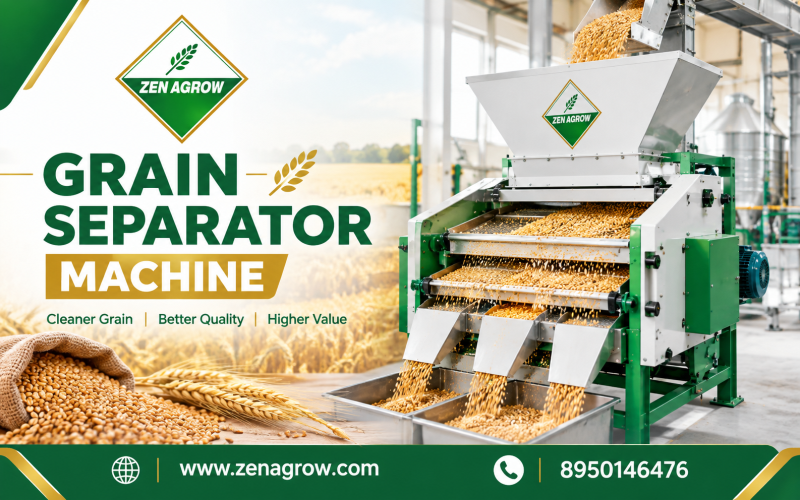
Once wheat, rice, or pulses are threshed, what comes out isn’t pure grain. It’s a mixture of grain, straw fragments, husk, chaff, and sometimes stones or other crop material. Separating actual grain from this mixed output is a critical step that determines how much usable, sellable produce a farmer actually walks away with. This is the job of a grain separator machine, and getting it right has a direct impact on both yield and income. In this guide, we’ll explain what a grain separator machine does, how it differs from related equipment like threshers and cleaners, and how to choose the right one for your operation. We’ll also look at the role agricultural machinery manufacturers in India play in this space, and how Zenagrow approaches grain separator machine design for real farm conditions.
What Is a Grain Separator Machine?
A grain separator machine separates threshed grain from straw, chaff, husk, and other plant material left over after harvesting and threshing. It’s one of the core functions inside a combine harvester, but standalone grain separator machines are also widely used, particularly where threshing and separation happen as distinct steps rather than in a single combined operation.
Inside a combine harvester, separation typically happens right after threshing. The threshing drum knocks grain loose from the crop, and the remaining straw and chaff pass over straw walkers while grain falls through to sieves below. A stream of air then blows away lighter dust and chaff, leaving relatively clean grain behind. Standalone grain separator machines follow a similar logic, using rotating components, sieves, and airflow to achieve the same result.
How a Grain Separator Differs From a Thresher
Threshing and separation are related but distinct steps. Threshing knocks grain loose from the stalk or head. Separation then divides that loosened grain from the straw and other plant material it’s still mixed with. Many machines combine both functions, but understanding the difference helps when evaluating equipment, since some setups need standalone separation capacity in addition to threshing.
Why a Grain Separator Machine Matters for Farm Output
The efficiency of grain separation directly affects how much of your actual harvest ends up as usable, sellable grain rather than being lost in straw or discarded material.
Key Benefits of Using a Grain Separator Machine
- Reduced grain loss: Poor separation can leave significant grain trapped in straw or discharged with residue, directly reducing your effective yield.
- Lower breakage rates: Well-designed separation systems handle grain gently, minimizing cracked or broken kernels that would otherwise lower grade and price.
- Cleaner output for further processing: Grain that’s properly separated from straw and chaff needs less additional cleaning before storage or sale.
- Faster overall harvest processing: Efficient separation keeps the entire harvesting and threshing operation moving smoothly, rather than creating bottlenecks.
- Better handling of difficult conditions: Modern grain separator machines are designed to handle crops that are slightly wet, lodged, or otherwise harder to process without excessive loss.
- Improved profitability per harvest: Every percentage point of grain saved through better separation translates directly into additional income at the same harvest volume.
How Does a Grain Separator Machine Work?
Understanding the mechanics helps you evaluate different machines and configurations more effectively.
1. Initial Separation at the Threshing Drum
As grain is knocked loose during threshing, most of it falls through a concave grate beneath the rotating drum, while remaining straw continues moving through the machine.
2. Straw Walker Separation
Any grain still mixed with straw passes over straw walkers, which shake and agitate the material so remaining grain and chaff fall through while straw continues to the rear of the machine.
3. Air Cleaning
A stream of air blows across the falling grain, removing dust and small bits of crushed plant material, leaving cleaner grain behind before it reaches the sieves.
4. Sieve Separation
The grain then passes over a set of sieves, often mounted on a shaking assembly known as a shoe. The upper sieve removes larger pieces of remaining chaff, while the lower sieve separates fully clean grain, letting it fall through, from any partially threshed material.
5. Grain Collection
Fully separated, clean grain moves to a collection tank or discharge point, ready for the next stage of storage, further cleaning, or sale.
Types of Grain Separator Machines Used in Agriculture
Different farm scales and setups call for different separation equipment.
- Integrated Combine Harvester Separators: Built directly into combine harvesters, handling threshing, separation, and cleaning in a single continuous operation.
- Standalone Grain Separators: Used where threshing happens separately, common in smaller or mid-sized farm operations using separate threshers.
- Rotary Separators: Use a rotating cylinder to separate grain from straw with less mechanical stress, often reducing grain breakage.
- Multi-Crop Separator Units: Designed to handle a range of crops like wheat, maize, pulses, and mustard with adjustable settings.
- Mobile Grain Separators: Trailer-mounted or portable units suited to smaller farms or custom hiring operations that move between fields.
Key Factors to Consider Before Buying a Grain Separator Machine
Choosing the right grain separator machine involves more than comparing capacity numbers.
- Grain loss performance: Ask manufacturers directly about typical grain loss rates for their machines, since this directly affects your effective yield.
- Crop compatibility: Confirm the machine handles your specific crops well, since wheat, rice, pulses, and oilseeds all separate differently.
- Capacity requirement: Match the machine’s throughput to your harvest volume so separation doesn’t become a bottleneck during peak season.
- Handling of difficult conditions: If your fields often have wet, lodged, or hard-to-thresh crops, check how well the machine performs under those conditions specifically.
- Breakage rate: Gentle handling matters for grain quality and price, so ask about typical breakage percentages under normal operating conditions.
- Build quality and durability: Separation components run under continuous mechanical stress, so sturdy construction affects long-term reliability.
- After-sales support: Reliable service and spare-parts availability matter enormously, especially since separation issues during peak harvest can cause real financial loss.
The Growing Importance of Grain Separation Technology in India
Farmers across India are increasingly adopting combine harvesters and separation equipment to handle crops like wheat, rice, and paddy, drawn by the efficiency and reduced labor dependency these machines offer. This shift reflects a broader move across Indian agriculture toward mechanized, integrated processing rather than relying on multiple separate manual steps.
Why Separation Efficiency Is Getting More Attention
As farms scale up and labor availability tightens, the cost of inefficient grain separation becomes harder to ignore. Every bit of grain lost in straw or discharged with residue represents real income left in the field. This has pushed both farmers and manufacturers to pay closer attention to separation performance, not just raw processing speed.
The Role of Agricultural Machinery Manufacturers in India
India’s diverse cropping patterns, from wheat and rice to pulses and oilseeds, create varied demand for grain separation equipment suited to different crop types and field conditions. Agricultural machinery manufacturers in India are increasingly focused on building grain separator machines that address this diversity directly.
Why Local Manufacturing Understanding Matters
Indian field conditions vary enormously, from irrigated plains to smaller, more fragmented landholdings, and crops can often be slightly wet or lodged depending on regional weather patterns. This makes it especially valuable to choose agricultural machinery manufacturers in India who understand these practical, on-ground conditions, rather than relying solely on equipment designed for very different farming environments elsewhere.
This is exactly where Zenagrow positions itself. As a manufacturer focused on practical, field-tested agricultural machinery, Zenagrow designs grain separator machine equipment with Indian crop diversity and field conditions in mind.
How Zenagrow Approaches Grain Separator Machine Design
Zenagrow understands that grain separation performance directly affects a farmer’s bottom line. That’s why Zenagrow focuses on building grain separator machines that combine:
- Efficient separation mechanisms designed to minimize grain loss and breakage across different crop types.
- Reliable performance under difficult field conditions, including slightly wet or lodged crops common in Indian farming.
- Sturdy, field-ready construction built to withstand continuous mechanical stress during peak harvest season.
- Accessible after-sales support, keeping equipment running instead of sitting idle during time-sensitive harvest windows.
Among agricultural machinery manufacturers in India, the real differentiator isn’t just which company builds the fastest grain separator machine. It’s which manufacturer builds one that consistently minimizes grain loss while standing behind that equipment for years of daily use. That reliability is the standard Zenagrow works toward.
Maintenance Tips to Keep Your Grain Separator Machine Running Efficiently
Proper maintenance keeps a grain separator machine performing consistently and minimizes avoidable grain loss.
- Clean sieves and straw walkers after every use to prevent buildup that can reduce separation efficiency.
- Inspect belts, drums, and moving components regularly for wear, unusual noise, or overheating.
- Adjust airflow and sieve settings for each new crop or batch, since different grains separate differently.
- Lubricate moving parts according to the manufacturer’s recommended maintenance schedule.
- Check for grain loss periodically during operation by inspecting discharged straw and residue for missed grain.
- Store the machine in a dry, covered area during the off-season to prevent rust and component damage.
- Keep spare parts on hand, especially before peak harvest season, to avoid unnecessary downtime.
Frequently Asked Questions About Grain Separator Machines
1. What is the main purpose of a grain separator machine?
A grain separator machine separates threshed grain from straw, chaff, and other plant material, ensuring more of your actual harvest ends up as usable, sellable grain rather than being lost in residue.
2. How is a grain separator machine different from a grain cleaner?
A grain separator machine focuses on separating grain from straw and larger plant material right after threshing, while a grain cleaner focuses on removing finer impurities like dust, stones, and weed seeds from already-separated grain.
3. Is a grain separator machine the same as a combine harvester?
Not exactly. A combine harvester integrates cutting, threshing, separation, and cleaning into a single machine, while a standalone grain separator machine handles just the separation function, often used alongside a separate thresher.
4. Why are agricultural machinery manufacturers in India focusing more on separation efficiency?
As Indian farms scale up and labor availability tightens, reducing grain loss during separation has become a bigger priority, pushing manufacturers to improve separation mechanisms specifically.
5. Can a grain separator machine handle wet or lodged crops?
Many modern machines are designed to handle slightly wet or lodged crops, but performance varies by model, so it’s worth confirming this capability directly with the manufacturer if your fields regularly face these conditions.
6. How much grain can be lost due to poor separation?
Grain loss varies significantly depending on the machine, crop condition, and operating settings, which is why checking a manufacturer’s typical loss performance is an important part of the buying decision.
7. Is investing in a better grain separator machine worth it for a mid-sized farm?
Yes. Even a small improvement in separation efficiency can meaningfully increase effective yield across a full harvest, often justifying the investment within a few seasons through reduced grain loss alone.
Final Thoughts
A grain separator machine plays a role that’s easy to overlook but directly affects how much of your harvest actually reaches the market. Poor separation quietly costs farmers real income every season, whether through grain lost in straw or excessive breakage during processing. As Indian agriculture continues moving toward more mechanized, integrated harvest processing, separation efficiency deserves just as much attention as raw processing speed.
Whether you’re evaluating a standalone separator or assessing the separation performance of a combine harvester, take the time to look closely at grain loss rates, crop compatibility, and after-sales support before you buy. Among agricultural machinery manufacturers in India, companies like Zenagrow are focused on building grain separator machine equipment that helps farmers keep more of what they grow.
Choosing the right grain separator machine today means less grain lost in the field, better quality output, and a stronger return on every harvest.

 English