- Plot No. 453-454, HSIIDC, Industrial Area, Saha, Haryana 133104

Seed Treatment Machine

Wheat Cleaning Machine
August 28, 2026
Grain Separator Machine
September 12, 2026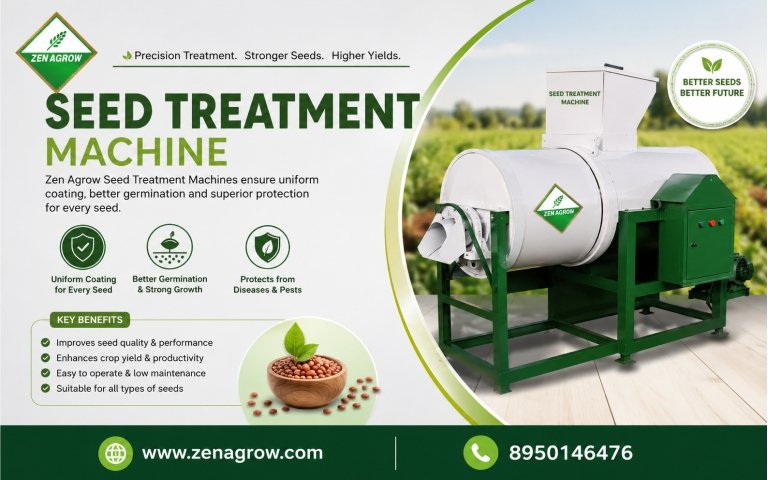
Modern agriculture depends heavily on healthy, disease-free seeds, and this is exactly where a seed treatment machine becomes an essential piece of equipment for farmers, seed companies, and agri-input businesses. Whether you are a small farmer looking to protect your crop from soil-borne diseases or a large-scale seed processing unit aiming to improve germination rates, investing in the right seed treatment machine can transform the quality and yield of your produce. In this blog, we will explore everything you need to know about seed treatment machines, their working process, benefits, types, and why brands like Zenagrow are becoming a trusted name in this industry.
What Is a Seed Treatment Machine?
A seed treatment machine is a mechanical device designed to coat seeds evenly with chemicals, fungicides, insecticides, or bio-stimulants before sowing. The purpose of this process is to protect seeds from pests, fungal infections, and soil-borne diseases while also improving germination percentage and early plant vigor. Unlike manual treatment methods, which are time-consuming and often result in uneven coating, a seed treatment machine ensures uniform application on every single seed, reducing wastage of chemicals and improving overall efficiency.
Companies like Zenagrow have designed seed treatment machines that cater to different scales of operations, from small farm-level units to industrial seed processing plants. These machines are engineered to handle various seed types including wheat, rice, maize, cotton, soybean, and vegetable seeds, making them versatile tools for the agricultural sector.
Why Seed Treatment Is Important Before Sowing
Before understanding the machine itself, it is important to know why seed treatment is a critical step in the farming process. Untreated seeds are highly vulnerable to fungal attacks, insect damage, and poor germination, especially when sown in soil that already carries pathogens from previous crops.
Here are some reasons why seed treatment should never be skipped:
- Protection against soil-borne diseases that can destroy an entire crop before it even germinates
- Improved germination rates, ensuring more seeds sprout into healthy seedlings
- Reduced pesticide usage in later growth stages since seeds are already protected
- Better root development in the early stages of plant growth
- Uniform crop stand across the field, leading to easier management and harvesting
- Cost savings in the long run by reducing crop losses due to disease and pest attacks
- Enhanced shelf life of treated seeds during storage and transportation
A seed treatment machine makes this process consistent, fast, and safe, which is why more farmers are shifting from manual treatment to mechanized solutions like those offered by Zenagrow.
How Does a Seed Treatment Machine Work?
The working mechanism of a seed treatment machine is fairly straightforward, yet highly effective. Seeds are fed into a hopper or intake chamber, where they move through a rotating drum or auger system. As the seeds move, a calibrated dosing system sprays or applies the treatment chemical in liquid or powder form. The rotating mechanism ensures that every seed gets an even coating without clumping or excessive chemical use.
Most seed treatment machines, including those manufactured by Zenagrow, come with adjustable flow control systems that allow operators to set the exact dosage required for different seed types and treatment chemicals. Once coated, the seeds pass through a drying or discharge section before being collected for packaging or direct sowing.
This automated process eliminates human error, reduces chemical exposure for workers, and significantly speeds up the treatment process compared to traditional hand-mixing methods.
Types of Seed Treatment Machines Available in the Market
Depending on the scale of operation and specific requirements, there are several types of seed treatment machines available today. Understanding these types will help you choose the right seed treatment machine for your needs.
1. Batch Type Seed Treatment Machine
This type processes seeds in fixed quantities or batches. It is ideal for small to medium-scale farmers or seed dealers who do not require continuous processing. Batch machines are generally more affordable and easier to operate.
2. Continuous Flow Seed Treatment Machine
Designed for large-scale operations, this machine treats seeds in a continuous stream rather than in batches. It is commonly used by commercial seed processing companies and offers higher throughput, making it suitable for industrial-level seed treatment.
3. Drum Type Seed Treatment Machine
This is one of the most common designs where seeds tumble inside a rotating drum while the treatment chemical is sprayed onto them. The tumbling action ensures even coating and is widely used because of its simplicity and effectiveness.
4. Mist Type Seed Treatment Machine
This variant uses a fine mist spray system to apply chemicals, which is particularly useful for delicate seeds that might get damaged by more aggressive mixing methods.
Zenagrow offers a range of these machine types, allowing customers to select a model that matches their production capacity, budget, and specific crop requirements.
Key Features to Look for in a Seed Treatment Machine
When purchasing a seed treatment machine, it is important to evaluate certain features to ensure you get the best value and performance. Here are the essential features to consider:
- Build quality and material – Stainless steel or corrosion-resistant components ensure durability, especially when handling chemical treatments
- Dosing accuracy – Precise dosing systems prevent overuse or underuse of chemicals
- Capacity and throughput – Choose a machine that matches your daily seed processing volume
- Ease of cleaning – Machines that are easy to clean reduce cross-contamination between different chemical treatments
- Power consumption – Energy-efficient models help reduce operational costs
- Portability – For farmers who need to move equipment between fields, lightweight and portable designs are preferable
- After-sales support – Reliable service and spare parts availability, which is one of the strengths of brands like Zenagrow
- Safety mechanisms – Enclosed chambers and proper ventilation to protect operators from chemical exposure
Selecting a seed treatment machine with these features ensures long-term reliability and better return on investment.
Benefits of Using a Seed Treatment Machine
Investing in a seed treatment machine offers numerous advantages that go beyond just convenience. Let us look at the major benefits in detail.
Improved Crop Yield
Treated seeds germinate more uniformly and are better protected against early-stage diseases, which directly translates into higher crop yield at harvest time.
Reduced Labor Dependency
Manual seed treatment requires significant labor and time. A seed treatment machine automates this process, freeing up workforce for other essential farm activities.
Consistent Chemical Application
Uneven manual application can lead to some seeds being over-treated while others remain under-treated. Machines ensure consistency across every batch.
Cost Efficiency
By optimizing chemical usage and reducing crop losses, a seed treatment machine pays for itself over time through improved productivity and reduced input wastage.
Better Worker Safety
Automated systems minimize direct human contact with chemicals, reducing health risks associated with manual seed treatment processes.
Environmentally Responsible Farming
Precise dosing means less chemical runoff into the soil and water systems, supporting more sustainable agricultural practices.
Why Zenagrow Is a Trusted Choice for Seed Treatment Machines
When it comes to selecting a reliable manufacturer, Zenagrow has established itself as a name farmers and agribusinesses can depend on. Zenagrow designs seed treatment machines that combine durability, precision, and ease of use, catering to the diverse needs of the agricultural community.
What sets Zenagrow apart is its focus on customer-specific solutions. Rather than offering a one-size-fits-all product, Zenagrow works closely with clients to understand their crop types, treatment chemicals, and processing volumes before recommending the ideal seed treatment machine. This customer-centric approach has helped Zenagrow build strong relationships within the farming and agri-business community.
Additionally, Zenagrow places strong emphasis on after-sales service, ensuring that customers receive timely support, spare parts, and maintenance guidance whenever needed. This level of commitment makes Zenagrow a preferred brand for those looking to invest in a seed treatment machine that delivers long-term value.
You can explore their range of products and learn more about their offerings by visiting Zenagrow.
Who Should Invest in a Seed Treatment Machine?
A seed treatment machine is not just for large agribusinesses. It is beneficial for a wide range of users, including:
- Individual farmers who want to protect their seeds before sowing
- Seed production companies that need to treat large volumes of seeds for distribution
- Agri-input dealers who offer treated seeds as a value-added service to farmers
- Cooperative societies that manage seed distribution for multiple member farmers
- Research institutions conducting trials on seed treatment chemicals and their effects
- Contract farming operations that require consistent seed quality across large plots
Regardless of the scale, a well-chosen seed treatment machine can improve efficiency and profitability across the entire seed-to-harvest cycle.
Tips for Maintaining Your Seed Treatment Machine
To get the most out of your investment, regular maintenance of your seed treatment machine is essential. Consider the following tips:
- Clean the machine thoroughly after every use to prevent chemical residue buildup
- Regularly inspect dosing nozzles and spray systems for blockages
- Lubricate moving parts as recommended by the manufacturer
- Store the machine in a dry, covered area when not in use
- Schedule periodic professional servicing, especially for continuous flow or industrial models
- Train operators properly on machine settings to avoid incorrect dosing
Following these practices will extend the lifespan of your seed treatment machine and maintain consistent treatment quality season after season.
Frequently Asked Questions About Seed Treatment Machines
1. What is the main purpose of a seed treatment machine? The main purpose of a seed treatment machine is to apply fungicides, insecticides, or bio-stimulants evenly onto seeds before sowing, protecting them from disease and improving germination rates.
2. Can a seed treatment machine be used for all types of seeds? Most seed treatment machines are versatile and can handle various seed types such as wheat, rice, maize, cotton, and vegetable seeds, though it is important to check the manufacturer’s specifications for compatibility.
3. How much does a seed treatment machine cost? The cost of a seed treatment machine varies depending on its type, capacity, and features. Batch type machines are generally more affordable, while continuous flow industrial machines cost more due to higher processing capacity.
4. Is it safe to operate a seed treatment machine without protective equipment? No, operators should always use protective gloves, masks, and eyewear when handling treatment chemicals, even though the machine reduces direct chemical exposure compared to manual methods.
5. How often should a seed treatment machine be cleaned? It is recommended to clean the machine after every use, especially when switching between different chemicals, to avoid cross-contamination and ensure accurate dosing for future batches.
6. Why should I choose Zenagrow for my seed treatment machine needs? Zenagrow offers reliable, durable, and customizable seed treatment machines along with strong after-sales support, making it a trusted choice for farmers and agribusinesses looking for long-term value.
7. Does using a seed treatment machine reduce overall pesticide usage on the farm? Yes, since seeds are treated precisely before sowing, the need for excessive pesticide application during later growth stages is often reduced, contributing to more sustainable farming practices.
Final Thoughts
A seed treatment machine is no longer a luxury but a necessity for anyone serious about improving crop health, yield, and farming efficiency. From protecting seeds against soil-borne diseases to ensuring uniform germination, the benefits of mechanized seed treatment far outweigh traditional manual methods. As demand for reliable and efficient agricultural equipment grows, brands like Zenagrow continue to lead the way by offering high-quality seed treatment machines tailored to the needs of modern farmers and seed businesses. For more information about seed treatment and its role in protecting seeds from pathogens and storage insects, refer to the FAO AGROVOC definition of seed treatment.
If you are planning to upgrade your seed processing setup, exploring options from trusted manufacturers like Zenagrow at https://www.zenagrow.com/ can be a valuable first step toward better crop outcomes and long-term agricultural success.

 English