- Plot No. 453-454, HSIIDC, Industrial Area, Saha, Haryana 133104

Indented Cylinder Grader

Agriculture Machine Company in India
October 22, 2026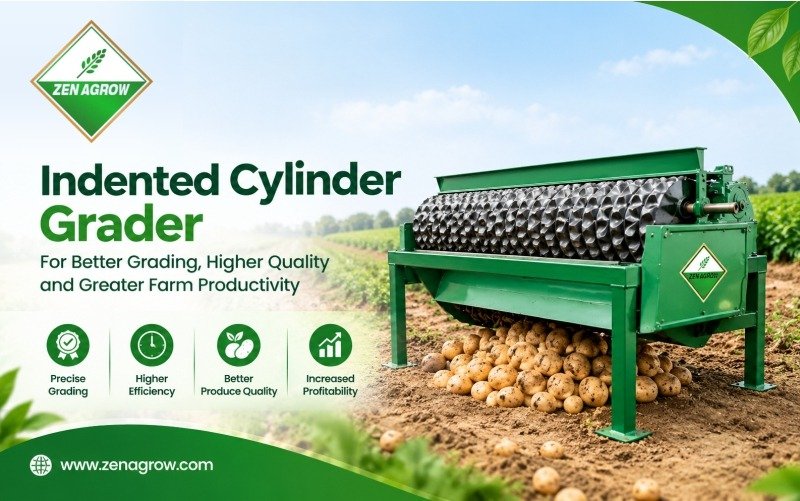
Indented Cylinder Grader: Working Principle, Benefits, and Applications
An indented cylinder grader is an important machine for separating and grading seeds, grains, and other agricultural materials according to their length. It helps processing businesses improve product uniformity and prepare materials for further handling.
How Zenagrow Supports Efficient Grain and Seed Grading
Zenagrow provides agricultural machinery solutions for businesses involved in grain cleaning, seed processing, and agricultural product grading. Choosing the right grading equipment can help improve processing consistency, reduce manual sorting, and support efficient plant operations.
Learn more about Zenagrow’s machinery and solutions at https://www.zenagrow.com/.
An indented cylinder grader is useful when agricultural materials contain a mixture of short and long particles that need to be separated. Its rotating cylinder uses specially formed indentations to lift particles of a particular length and separate them from the main material flow. The machine is commonly considered for seed plants, grain processing units, and other agricultural facilities where length-based separation is required.
What Is an Indented Cylinder Grader?
An indented cylinder grader is a mechanical grading machine designed to separate particles according to their length and, to some extent, their shape. Unlike equipment that mainly separates materials by weight or width, this machine focuses on differences in particle length.
The main working component is a rotating cylinder with small, specially shaped indentations on its inner surface. As mixed material enters the cylinder, particles interact with these indentations. Particles that fit into the pockets are lifted as the cylinder rotates and then discharged into a collection area. Particles that do not fit remain in the material flow and leave through a different outlet.
This operating principle makes the machine suitable for removing short or long unwanted particles from a product stream, depending on the cylinder design and processing setup.
Why Is Length-Based Grading Important in Agriculture?
Agricultural products are rarely perfectly uniform after harvesting, threshing, or initial cleaning. A batch may contain broken grains, short particles, weed seeds, or other materials with different dimensions. These differences can affect product quality and the efficiency of later processing stages.
Length-based grading can help businesses:
- Separate selected short or long particles from a mixed batch.
- Improve the uniformity of processed seed and grain lots.
- Prepare materials for additional cleaning or grading.
- Reduce reliance on repetitive manual sorting.
- Support consistent processing in commercial facilities.
- Improve the suitability of products for specific downstream operations.
The final result depends on the crop, the condition of the incoming material, the cylinder configuration, and the machine settings.
How Does an Indented Cylinder Grader Work?
The working process generally involves five stages.
1. Feeding the Material
The grain or seed mixture enters the machine through a feeding arrangement. An even and controlled feed helps distribute the material inside the cylinder and supports stable operation.
Excessive feeding can reduce separation quality because particles may not have enough space or time to interact properly with the indentations.
2. Rotation of the Indented Cylinder
The cylinder rotates at a controlled speed. Its inner surface contains indentations designed to pick up particles that match the intended length range.
The shape and dimensions of these indentations influence which particles are collected and lifted during rotation.
3. Selection of Particles
As the cylinder turns, suitable particles enter the indentations. Longer or shorter particles may remain outside the pockets, depending on the machine’s design and grading objective.
This difference in particle movement creates the separation process.
4. Lifting and Discharging
Particles held in the indentations rise with the rotating cylinder. At a particular point in the rotation, gravity allows them to fall into a collecting trough or discharge arrangement.
The collected material can then be directed to a separate outlet.
5. Collection of Graded Material
The separated fractions leave through their respective discharge points. Operators can collect and inspect these fractions to determine whether the required grading quality has been achieved.
Testing the output and adjusting the machine, where possible, can help maintain consistent performance.
Main Components of an Indented Cylinder Grader
Understanding the main components helps buyers evaluate a machine before purchasing it.
Indented Cylinder
The cylinder is the central grading component. Its internal indentations determine which particles can be picked up during rotation. The appropriate indentation design depends on the material and the required separation.
Feeding System
The feeding system distributes material into the cylinder. Consistent feeding is important because uneven material flow may affect grading efficiency.
Rotating Drive Mechanism
A motor and drive arrangement rotate the cylinder. The drive must be suitable for the intended workload and allow stable operation.
Collection Trough
The collection trough receives particles lifted by the indentations. Its position and design help direct the separated material toward the correct outlet.
Discharge Outlets
Separate outlets allow different material fractions to leave the machine. Correct discharge arrangements help prevent unnecessary mixing after separation.
Supporting Frame and Housing
The frame supports the machine’s components and helps maintain alignment during operation. A suitable structure also makes inspection and maintenance easier.
Applications of an Indented Cylinder Grader
Indented cylinder graders are used in agricultural and seed-processing operations where particle length is an important grading factor.
Seed Processing Plants
Seed processors may use length grading to separate selected seed fractions or remove certain unwanted particles. The correct setup depends on the crop and the physical characteristics of the seed.
Wheat and Grain Processing
Wheat and other grains may contain broken kernels or foreign particles that differ in length from the desired product. An indented cylinder grader can form part of a larger cleaning and grading line.
Pulses and Legumes
Certain pulse-processing operations may benefit from length-based separation. However, the machine must be selected and configured for the specific crop to avoid poor separation or unnecessary product loss.
Food and Agricultural Processing Units
Processing facilities may incorporate length grading when they need more uniform material before storage, packaging, or further processing. Suitability depends on product requirements and the complete processing setup.
Commercial Seed Grading Facilities
Businesses handling different seed varieties may use grading machinery as part of a multi-stage process. An indented cylinder grader is most useful when length differences are relevant to the required product specification.
Benefits of Using an Indented Cylinder Grader
The value of an indented cylinder grader depends on how well it matches the material and the production requirements.
1. Targeted length separation
The machine is designed to separate particles according to length rather than relying only on weight or width.
2. Improved product consistency
Removing selected length fractions can help produce a more uniform batch for subsequent operations.
3. Continuous processing
A correctly sized machine can operate as part of a continuous production line, reducing the need for repeated manual sorting.
4. Integration with other equipment
The grader can be incorporated into a broader grain or seed processing system that includes cleaning, conveying, and other grading stages.
5. Reduced repetitive labour
Mechanical separation can reduce the amount of manual sorting required, although operators are still needed for monitoring, inspection, and maintenance.
6. Flexible process planning
Different cylinder configurations and operating settings may support different grading objectives, subject to the machine’s design and the material being processed.
Indented Cylinder Grader vs. Other Grading Machines
Different grading machines solve different separation problems. Buyers should select equipment according to the physical property that needs to be separated.
| Machine type | Main separation purpose |
|---|---|
| Indented cylinder grader | Separates particles according to length |
| Screen grader | Separates materials mainly by size, using screen openings |
| Gravity separator | Separates materials according to differences in density and aerodynamic behaviour |
| Air separator | Uses airflow to remove or separate materials with different aerodynamic properties |
| Grain separator | Separates grain mixtures according to the machine’s specific screening or separation mechanism |
An indented cylinder grader is not a replacement for every other grading machine. A processing line may need several types of equipment to address different impurities and product characteristics.
For related machinery, explore Zenagrow’s Grain Separator Machine and Grain Grading Machine pages.
How to Choose the Right Indented Cylinder Grader
Selecting suitable equipment requires more than comparing the purchase price. Buyers should evaluate the product, required output, machine design, and long-term operating needs.
Identify the Crop and Material Characteristics
Start by identifying the crop to be processed. Wheat, pulses, and different seed varieties may vary in length, shape, surface condition, and size distribution. These differences affect how the machine should be configured.
Define the Grading Objective
Determine whether the purpose is to remove short particles, separate longer material, or produce specific length fractions. A clearly defined objective helps the supplier recommend a suitable cylinder arrangement.
Check Processing Capacity
Consider the required throughput in kilograms or tonnes per hour. Actual capacity depends on the crop, feed condition, grading settings, and acceptable separation quality.
Review Cylinder Specifications
Ask about cylinder dimensions, indentation design, available configurations, rotational speed, and adjustment options. Confirm that the proposed arrangement suits the material you intend to process.
Evaluate Construction Quality
Inspect the frame, rotating components, drive system, guards, and access points. Good construction and accessible service areas can make routine maintenance easier.
Ask About Power and Maintenance
Confirm the motor specifications, power requirements, lubrication schedule, and availability of replacement parts. Maintenance needs should be considered alongside the initial cost.
Request a Material Trial
Whenever possible, ask the supplier to test a representative sample of your material. A trial can help establish whether the machine achieves the required separation quality and acceptable product recovery.
Maintenance Tips for Better Grading Performance
Regular maintenance supports reliable operation and helps reduce avoidable downtime.
- Clean the cylinder regularly: Remove dust, chaff, and accumulated material from the indentations.
- Inspect the rotating parts: Check for unusual wear, damage, or vibration.
- Monitor the drive system: Inspect belts, bearings, and other drive components according to the manufacturer’s instructions.
- Check the feeding arrangement: Keep material flow even and avoid overloading the machine.
- Inspect collection areas: Make sure the troughs and outlets remain clear and that separated fractions do not mix.
- Follow lubrication guidelines: Use the recommended lubricants and service intervals.
- Keep safety guards in place: Isolate the power supply before cleaning or maintenance, following the manufacturer’s safety procedures.
- Record machine performance: Track throughput, product quality, downtime, and maintenance work to identify recurring problems.
Common Factors That Affect Grading Efficiency
Even a well-designed machine may produce inconsistent results if the operating conditions are unsuitable.
Uneven feeding: Too much material entering at once can interfere with particle contact and separation.
Incorrect indentation selection: Indentations that do not match the crop may pick up the wrong particles or fail to separate the intended fraction.
Unsuitable cylinder speed: Rotation speed affects how material interacts with the cylinder and when particles are discharged. Follow the manufacturer’s recommended settings.
High impurity levels: Material containing excessive dust, straw, or other foreign matter may need preliminary cleaning before length grading.
Poor maintenance: Worn components, blocked indentations, or problems with the drive can reduce performance.
Incorrect expectations: An indented cylinder grader separates according to length-related characteristics. It may not remove every impurity, particularly those that are similar in length to the desired product.
For this reason, some facilities combine length grading with pre-cleaning, screening, aspiration, or other separation stages.
Zenagrow’s Related Agricultural Machinery Solutions
Zenagrow’s website provides information about machinery for different grain and seed processing requirements. Buyers can review related equipment to understand how individual machines may fit into a complete processing line.
Useful resources include:
- Grain Separator Machine — explore grain separation equipment.
- Grain Grading Machine — learn about grain grading applications.
- Seed Grading Machine Manufacturers in India — review seed grading machinery information.
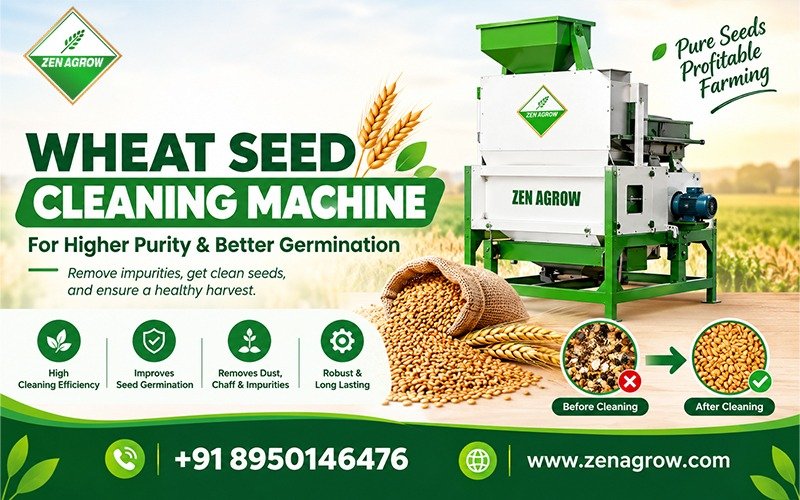
- Wheat Cleaning and Grading Machine — explore wheat cleaning and grading requirements.
- Seed Grading Equipment — learn about equipment used in seed grading operations.
Visit Zenagrow to explore its agricultural machinery range and identify equipment relevant to your processing needs. Before making a purchase, discuss the crop type, required capacity, grading objective, and expected output with the supplier.
Important Points to Remember Before Buying an Indented Cylinder Grader
Use this checklist when comparing machines and preparing a purchase enquiry.
- Confirm the crop and the length-based separation objective.
- Estimate the required processing capacity.
- Check cylinder size and indentation specifications.
- Ask whether the machine can separate the required particle fractions.
- Review motor power, operating requirements, and safety features.
- Compare construction quality and ease of cleaning.
- Ask about spare parts, maintenance, and technical support.
- Request a sample test or performance demonstration where possible.
- Consider whether pre-cleaning or additional grading equipment is required.
- Evaluate total operating cost rather than purchase price alone.
These checks can help buyers make a more informed decision and select equipment that fits their production requirements.
Frequently Asked Questions About Indented Cylinder Graders
1. What is an indented cylinder grader used for?
An indented cylinder grader is used to separate seeds, grains, and similar agricultural materials according to their length. It can remove selected short or long particles when the cylinder design matches the grading objective.
2. What is the working principle of an indented cylinder grader?
The machine uses a rotating cylinder with specially shaped indentations. Particles that fit into the indentations are lifted and discharged into a collection area, while other particles follow a different path.
3. Can an indented cylinder grader be used for wheat?
Yes, it may be used in wheat-processing operations when length-based separation is required. The cylinder configuration should be selected according to the wheat variety, incoming material, and desired output.
4. What is the difference between an indented cylinder grader and a screen grader?
An indented cylinder grader separates particles primarily by length through specially shaped pockets. A screen grader separates materials mainly according to whether particles can pass through particular screen openings.
5. Does an indented cylinder grader remove dust and stones?
It is not designed to remove every type of dust, stone, or foreign material. Pre-cleaners, screens, destoners, and air separators may be needed for impurities that require other separation methods.
6. Which factors determine the capacity of an indented cylinder grader?
Capacity depends on cylinder dimensions, indentation design, rotation speed, crop characteristics, material condition, feed rate, and the required separation quality. Buyers should confirm the expected throughput with the supplier.
7. How can I maintain an indented cylinder grader?
Clean the cylinder and indentations, inspect the drive and rotating components, follow lubrication instructions, check outlets, and replace worn parts as recommended by the manufacturer. Always follow the machine’s safety instructions.
8. How do I select the right indented cylinder grader?
Identify the crop, define the grading objective, determine the required capacity, review cylinder specifications, and evaluate maintenance requirements. A material trial can help confirm whether the equipment meets your needs.
9. Can an indented cylinder grader work with other agricultural machines?
Yes. It can be integrated into a processing line with suitable cleaning, screening, conveying, and grading equipment. The exact arrangement depends on the crop and the quality standards required.
10. Where can I learn more about agricultural grading machinery?
You can explore the related machinery pages on Zenagrow’s official website to learn about grain separators, grain grading machines, wheat cleaning systems, and seed grading equipment.
Conclusion
An indented cylinder grader is a useful option for agricultural processing businesses that need to separate materials according to length. Its rotating, indented cylinder allows selected particles to be collected separately, making it suitable for specific grain and seed grading applications. For more information about grain handling and post-harvest processing, visit the University of California Agriculture and Natural Resources.
The best results depend on selecting the correct cylinder configuration, maintaining a consistent feed, using suitable operating settings, and keeping the machine clean. Buyers should also consider whether the process requires additional cleaning or grading equipment to achieve the desired output.
By evaluating crop characteristics, processing capacity, construction, maintenance, and product recovery, businesses can choose a grading solution that supports their operational needs. Visit https://www.zenagrow.com/ to explore related agricultural machinery and learn more about equipment for grain and seed processing.

 English