- Plot No. 453-454, HSIIDC, Industrial Area, Saha, Haryana 133104

Agriculture Machinery Companies

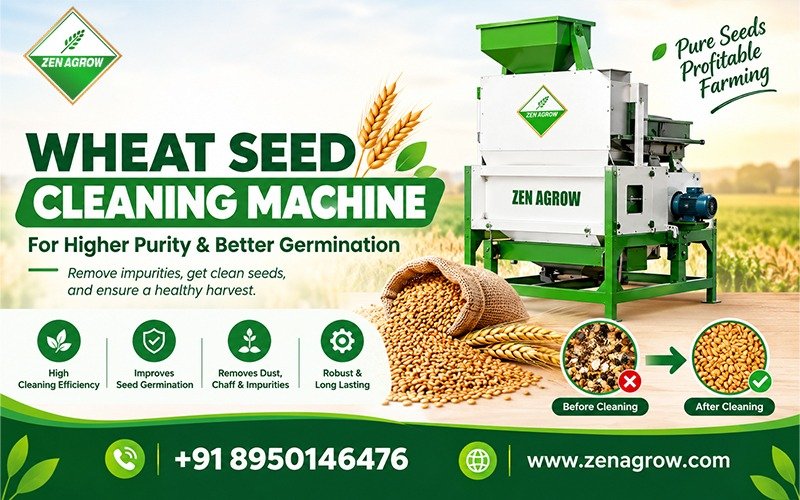
Wheat Seed Cleaning Machine
October 17, 2026Agriculture Machine Company in India
October 22, 2026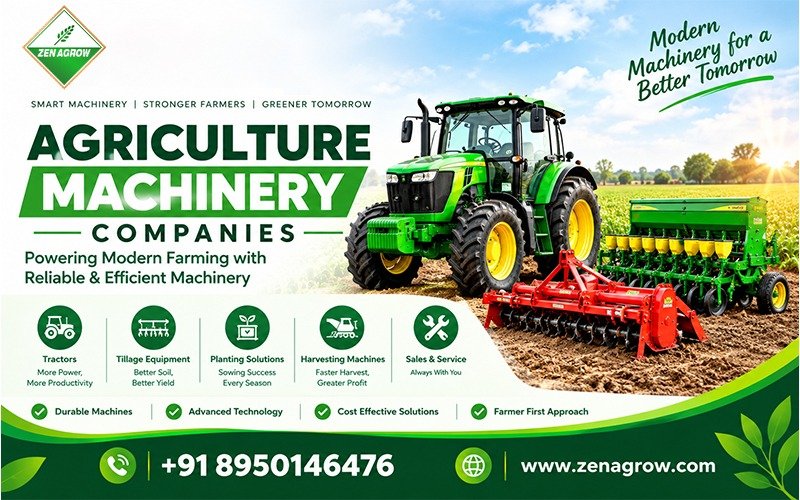
Agriculture Machinery Companies: Equipment, Benefits, and Selection Guide
Agriculture machinery companies play an important role in modern farming and grain processing by providing equipment that helps improve productivity, reduce manual work, and maintain consistent processing quality. From seed cleaning and grain grading to wheat cleaning and seed treatment, the right machinery can support farmers, seed processors, grain traders, and agricultural businesses. Choosing reliable equipment depends on processing requirements, machine capacity, maintenance needs, and the type of agricultural material being handled.
Zenagrow: A Trusted Name in Agricultural Machinery Solutions
Zenagrow is an agricultural machinery manufacturer based in Saha, Haryana, India, offering equipment designed for grain cleaning, seed grading, and agricultural processing applications. The company focuses on practical machinery solutions for businesses that need to handle agricultural products efficiently and prepare them for storage, grading, trading, or further processing.
Agricultural processing requirements differ from one business to another. A seed processing unit may need accurate grading and cleaning, while a grain handling facility may require equipment that removes unwanted materials and separates grains according to size. Zenagrow provides machinery options for these applications, helping businesses identify equipment that suits their operational requirements.
Explore the Agricultural Machinery Manufacturers page to learn more about Zenagrow’s agricultural machinery solutions.
What Do Agriculture Machinery Companies Do?
Agriculture machinery companies manufacture, supply, or distribute equipment used in farming, harvesting, seed processing, grain handling, and post-harvest operations. Their products help agricultural businesses perform repetitive tasks with greater consistency and reduce dependence on manual labour.
Depending on their specialisation, these companies may provide tractors, harvesters, seed drills, irrigation equipment, threshers, grain cleaners, grading machines, and seed treatment systems. Some manufacturers focus on field operations, while others specialise in machinery used after crops have been harvested.
For grain and seed processing businesses, specialised equipment is particularly important. Cleaning machines remove unwanted materials, grading machines separate products into different size or quality categories, and seed treatment machines help apply appropriate treatments before sowing.
Selecting machinery from a suitable manufacturer allows businesses to build a processing setup that matches their crop type, production volume, available space, and quality requirements.
Types of Machinery Offered by Agriculture Machinery Companies
Different agricultural operations require different types of machinery. Understanding the available equipment helps buyers select the right solution for their facility.
1. Seed Cleaning Machines
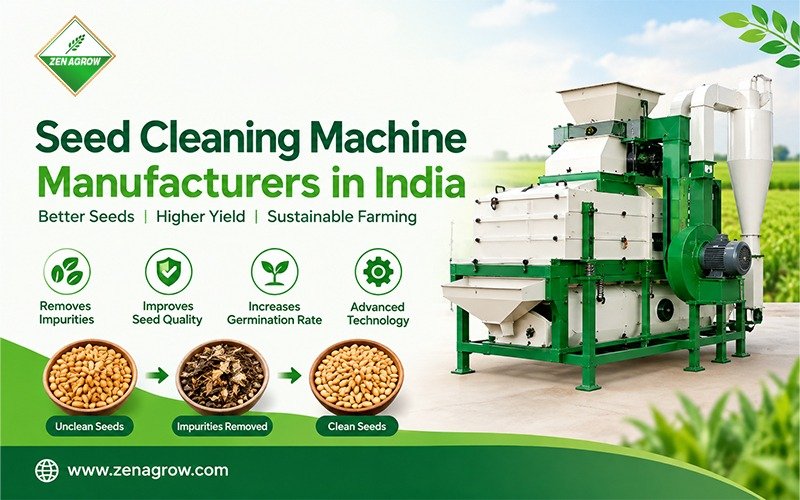
Seed cleaning machines remove impurities such as dust, chaff, broken plant material, weed seeds, and other unwanted particles from harvested seeds. Depending on the design, these machines may use screens, airflow, vibration, or combinations of separation methods.
Clean seed lots are easier to handle and can be prepared for grading, storage, packaging, or further processing. The required cleaning system depends on seed size, impurity levels, moisture conditions, and processing capacity.
Businesses looking for specialised equipment can explore Zenagrow’s Seed Cleaning Machine solutions.
2. Grain Cleaning Machines
Grain cleaning equipment is used to remove foreign materials from wheat, rice, maize, pulses, and other agricultural commodities. Depending on the machine configuration, it may separate lightweight impurities, dust, chaff, and certain oversized or undersized particles.
Cleaning is an important step before storage, milling, grading, and commercial distribution. Removing unwanted materials can help improve the consistency of the grain lot and support more organised handling.
Learn more about the Grain Cleaner for agricultural grain-processing applications.
3. Grain Grading Machines
Grain grading machines separate agricultural products according to characteristics such as size, thickness, and other measurable physical properties. They help processing businesses prepare more uniform batches for storage, packaging, trading, or subsequent operations.
A grading machine may use screens or other separation mechanisms depending on the product and required output. Buyers should consider the grain variety, target grade sizes, expected throughput, and separation accuracy when comparing equipment.
For more information, visit Zenagrow’s Grain Grading Machine page.
4. Wheat Cleaning and Grading Machines
Wheat processing often involves both cleaning and grading. Cleaning removes unwanted materials, while grading separates wheat into fractions according to selected physical characteristics.
Combining these operations in an appropriate processing line can help reduce repeated handling and organise the workflow. The best configuration depends on the initial condition of the wheat, the required output quality, and the capacity of the facility.
Businesses processing wheat can explore the Wheat Cleaning and Grading Machine page for relevant equipment information.
5. Seed Grading Machines
Seed grading machines help separate seeds into different categories according to size, thickness, or other physical characteristics supported by the equipment. Grading can make seed lots more uniform and support subsequent inspection, packaging, and distribution.
The selection process should consider seed type, desired grading fractions, throughput, adjustment requirements, and the possibility of seed damage during processing.
Explore Zenagrow’s information about Seed Grading Machine Manufacturers in India to understand the equipment category and its applications.
6. Seed Grading Equipment
Seed grading equipment is used by seed processors, agricultural businesses, and commercial facilities that need to separate seeds into more consistent batches. Depending on the process, equipment may use screening, size separation, or other grading techniques.
The correct setup depends on the crop variety, seed dimensions, required output, and whether cleaning is needed before grading. Businesses should assess the complete processing workflow rather than choosing a machine based on capacity alone.
Read more about Seed Grading Equipment to explore this category.
7. Seed Treatment Machines
Seed treatment machines are used to apply suitable seed-treatment products in a controlled manner before sowing. Depending on the system, the equipment helps distribute the treatment across seeds to support more consistent coverage.
The treatment method and product must be appropriate for the crop and intended use. Operators should follow the product label, applicable safety instructions, and recommended handling procedures.
Visit Zenagrow’s Seed Treatment Machine page to learn about equipment for seed-treatment applications.
Why Agriculture Machinery Companies Are Important for Modern Farming
Agricultural machinery manufacturers and suppliers help businesses adopt equipment suited to changing production requirements. Their importance extends beyond supplying machines because equipment selection, technical guidance, installation, and maintenance can all influence processing performance.
Improved Processing Efficiency
Machines can process larger quantities of agricultural material than manual methods in many commercial applications. Properly selected equipment can also reduce unnecessary handling between cleaning, grading, and packaging stages.
Reduced Manual Work
Automated and mechanised processes reduce the need for workers to perform repetitive sorting and handling tasks. Workers can instead focus on monitoring equipment, checking product quality, and managing production.
More Consistent Output
Manual separation may vary with operator experience and working conditions. Suitable machinery can provide more repeatable processing results when correctly adjusted, operated, and maintained.
Better Material Handling
Cleaning and grading equipment can help prepare agricultural products for subsequent operations. Removing impurities and separating material into selected fractions can make storage, packaging, and distribution more organised.
Support for Business Growth
As a processing business expands, machinery with an appropriate capacity can help accommodate increased production requirements. Planning for future demand is important, but equipment should still match the actual volume and type of material being processed.
How to Choose the Right Agriculture Machinery Company
Choosing among agriculture machinery companies requires more than comparing machine prices. Buyers should evaluate equipment suitability, construction, service support, and the manufacturer’s understanding of their processing requirements.
1. Identify Your Processing Requirements
Start by identifying the crop or material you intend to process. Wheat, rice, pulses, maize, oilseeds, and different seed varieties may require different machine configurations.
Determine whether you need cleaning, grading, seed treatment, or multiple stages within one processing line.
2. Check Machine Capacity
Machine capacity should match the expected volume of material handled per hour. A machine with insufficient capacity may slow production, while an unnecessarily large machine may increase initial investment and operating costs.
Ask the manufacturer how the stated capacity relates to your specific crop and operating conditions.
3. Evaluate Construction and Components
Review the machine’s frame, screens, motors, bearings, airflow system, and other relevant components. The appropriate construction depends on the machine type, operating environment, and expected workload.
Request technical specifications and clarify which components are included in the quoted configuration.
4. Understand Cleaning or Grading Performance
Ask how the machine separates the intended material and which impurities or size fractions it can handle. Where possible, arrange a product trial using material similar to your actual input.
A trial can help establish realistic expectations for output quality, processing capacity, and material loss.
5. Compare Maintenance Requirements
Regular maintenance supports reliable operation. Before purchasing, ask about screen replacement, lubrication, cleaning access, spare parts, and routine inspection requirements.
Machines that are easier to inspect and maintain can help reduce avoidable interruptions.
6. Check Technical Support
Installation guidance, operator training, troubleshooting assistance, and spare-parts availability can influence the long-term value of machinery.
Clarify the service arrangements before finalising an order, especially if the equipment will operate in a continuous commercial processing environment.
7. Consider Total Operating Cost
The purchase price is only one part of the investment. Buyers should also consider electricity consumption, labour, maintenance, replacement components, installation, and downtime.
Compare machines based on their expected performance and operating requirements rather than choosing solely by the lowest initial price.
Important Factors to Consider Before Purchasing Agricultural Machinery
Before selecting a machine, prepare a list of practical requirements. This helps you compare suppliers using consistent criteria.
- Crop type: Confirm that the machine is suitable for the intended grain, seed, or agricultural product.
- Processing capacity: Match the equipment to your expected hourly and daily throughput.
- Required output: Define the level of cleanliness or grading separation you need.
- Machine configuration: Check the available screens, airflow adjustments, motors, and other relevant components.
- Available space: Measure the installation area and allow space for material feeding, discharge, cleaning, and maintenance.
- Power requirements: Confirm electrical supply, motor specifications, and expected energy use.
- Product handling: Consider how raw material enters the machine and how processed fractions are collected.
- Maintenance access: Check whether routine cleaning, inspection, and component replacement are practical.
- Safety provisions: Review guards, operating instructions, and safe maintenance procedures.
- After-sales support: Confirm warranty terms, service availability, and spare-parts arrangements.
- Future requirements: Consider whether the equipment can fit into a planned expansion or larger processing line.
- Budget: Evaluate the full cost of ownership, including installation and ongoing operation.
Applications of Agricultural Machinery in Different Industries
Agricultural machinery is used across several sectors, and the required equipment varies with the purpose of the operation.
Farming and Crop Production
Farmers use machinery for soil preparation, planting, irrigation, crop maintenance, harvesting, and post-harvest handling. The equipment selected depends on farm size, crop type, local conditions, and available resources.
Seed Processing Units
Seed processing facilities use cleaning and grading machines to prepare seed lots for inspection, treatment, packaging, and distribution. The sequence of operations depends on seed characteristics and quality requirements.
Grain Markets and Trading Businesses
Grain traders and storage facilities may use cleaning and grading equipment to organise incoming produce and prepare it for sale or further processing. The required configuration depends on the commodity and buyer specifications.
Flour Mills and Food Processing Facilities
Wheat and other grains may need cleaning before milling. Appropriate pre-processing equipment helps remove unwanted materials and prepare grain for the next stage of production.
Commercial Agricultural Processing Plants
Large processing plants may combine several machines into a continuous line. Conveyors, elevators, cleaners, graders, and collection systems can be arranged to support material movement and production flow.
Why Equipment Selection Matters for Grain and Seed Processing
The quality of a processing operation depends on the interaction between the raw material, machine design, operating settings, and maintenance practices.
For example, cleaning wheat requires a different objective from grading wheat. A cleaning system aims to remove unwanted materials, whereas a grading system separates the product according to selected characteristics. Treating these as separate but connected stages helps businesses plan an appropriate processing line.
Businesses that handle wheat may also find it useful to review the Wheat Cleaning Machine page. For wheat grading requirements specific to local terminology and applications, the Gehu Grading Machine page provides another relevant resource.
Where a facility handles multiple seed varieties, the equipment should be assessed for adjustment requirements, changeover time, and the potential for cross-contamination between batches. A well-planned workflow can make operation more organised and help reduce avoidable product mixing.
Common Mistakes to Avoid When Buying Agricultural Machinery
Buyers can make better purchasing decisions by identifying common mistakes before selecting a supplier.
- Choosing only by price: A lower initial price does not necessarily mean lower operating costs or better performance.
- Ignoring actual capacity: Capacity claims should be checked against the intended crop and operating conditions.
- Overlooking product trials: Testing representative material can help identify whether a machine meets practical requirements.
- Neglecting maintenance: Spare-parts availability and routine servicing should be considered before purchase.
- Selecting the wrong machine type: Cleaning, grading, and seed treatment perform different functions and should not be treated as interchangeable.
- Ignoring installation needs: Power supply, floor space, feeding arrangements, and discharge points can affect the installation process.
- Not checking service terms: Warranty coverage, technical support, and delivery arrangements should be confirmed in writing.
Future of Agriculture Machinery Companies in India
Agricultural machinery requirements continue to evolve as farming and processing businesses seek improved efficiency, reliable output, and better control over operating costs. Equipment selection is increasingly connected with the complete production process rather than an individual machine alone.
In grain and seed processing, practical improvements may include adjustable machine settings, more efficient material movement, easier maintenance access, and better integration between cleaning and grading stages. The suitability of these features depends on the crop, operating scale, and available budget.
For buyers, the most useful approach is to assess current processing challenges and identify equipment that addresses them directly. A machine should deliver practical benefits under real working conditions rather than simply offer features that are not needed by the business.
Agriculture machinery companies that understand their customers’ applications can help buyers evaluate suitable configurations and plan for future production requirements. Clear technical specifications, realistic capacity expectations, and dependable support remain important factors when investing in agricultural equipment.
Frequently Asked Questions About Agriculture Machinery Companies
1. What do agriculture machinery companies manufacture?
Agriculture machinery companies manufacture or supply equipment for farming, harvesting, crop handling, grain cleaning, seed grading, irrigation, and other agricultural operations. Their product ranges depend on their specialisation.
2. How do I choose the best agriculture machinery company in India?
Compare the company’s experience with your application, machine specifications, suitable processing capacity, construction quality, maintenance requirements, warranty terms, and after-sales support. Request a demonstration or product trial where possible.
3. What machinery is used for grain cleaning?
Grain cleaning machines may use screens, airflow, vibration, or combinations of separation methods to remove dust, chaff, and other unwanted materials. The suitable design depends on the grain type and impurities present.
4. What is the difference between a grain cleaning machine and a grading machine?
A grain cleaning machine primarily removes unwanted materials from the product. A grading machine separates the cleaned material into different categories according to selected characteristics, such as size or thickness.
5. Which machine is suitable for seed processing?
Seed processing may require a combination of cleaning, grading, and treatment equipment. The correct setup depends on the seed variety, initial condition, required output, processing capacity, and intended use.
6. What factors affect agricultural machinery prices?
Prices depend on machine type, capacity, materials, components, automation, configuration, installation requirements, and after-sales arrangements. Buyers should request a detailed quotation based on their specific application.
7. Why is machine capacity important when purchasing agricultural equipment?
Capacity affects how much material can be processed within a given period. Choosing a suitable capacity helps align production needs with equipment performance, labour requirements, and operating costs.
8. Does agricultural processing machinery require regular maintenance?
Yes. Routine inspection, cleaning, lubrication where required, and checking wear components help maintain safe and reliable operation. The maintenance schedule should follow the manufacturer’s instructions.
9. What should I ask a machinery manufacturer before placing an order?
Ask about crop suitability, processing capacity, output quality, power requirements, machine dimensions, installation, warranty, spare parts, operator training, and service support. Request written specifications before confirming the order.
10. Where can I find agricultural machinery for seed and grain processing?
You can explore Zenagrow’s website for information about seed cleaning, grain cleaning, wheat processing, seed grading, and seed treatment equipment. Review the specifications and contact the company to discuss your application and processing requirements.
Conclusion
Choosing among agriculture machinery companies is an important decision for farmers, seed processors, grain traders, and agricultural businesses. The right equipment can support efficient material handling, reduce repetitive manual work, improve processing consistency, and prepare agricultural products for storage, grading, or further processing. Before purchasing, evaluate crop suitability, capacity, construction, maintenance, operating costs, and technical support. According to the Food and Agriculture Organization of the United Nations (FAO), sustainable agricultural mechanization can improve productivity, reduce hard labour, and support efficient agricultural processing.
Zenagrow provides agricultural machinery solutions for grain and seed processing applications, including cleaning, grading, and seed treatment. Businesses can explore the company’s equipment pages to identify relevant options and assess their requirements before making a purchase. By comparing specifications and selecting machinery suited to actual operating conditions, businesses can build a more practical and reliable processing setup.

 English