- Plot No. 453-454, HSIIDC, Industrial Area, Saha, Haryana 133104

Seed Cleaning Machine Manufacturers in India

gehu grading machine
September 28, 2026
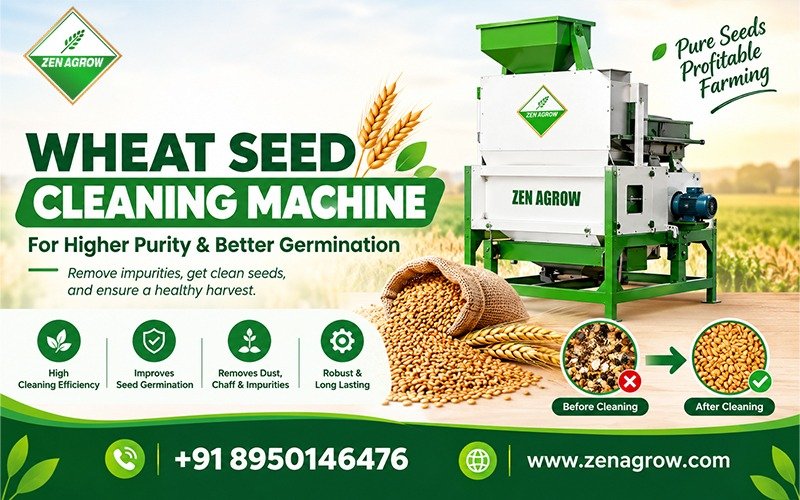
Wheat Seed Cleaning Machine
October 17, 2026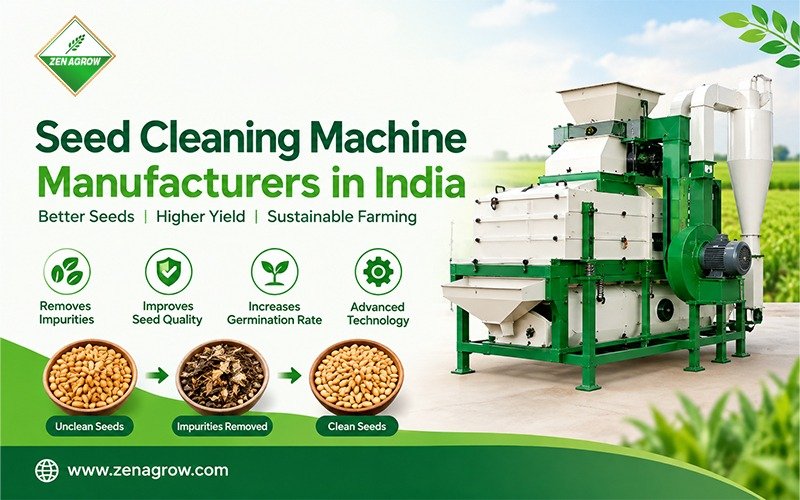
Seed Cleaning Machine Manufacturers in India: A Complete Guide to Seed Cleaning Equipment
Seed cleaning machine manufacturers in India help farmers, seed processors, and agricultural businesses improve seed quality by separating unwanted materials from useful seeds. Experienced agricultural machinery manufacturers provide equipment designed to remove dust, chaff, broken seeds, and other impurities for cleaner, more consistent processing.
Seed quality plays an important role in modern agriculture. Before seeds are stored, packaged, sold, or prepared for sowing, they often need to be cleaned and sorted. Proper cleaning can reduce unwanted material, improve handling, and help seed businesses maintain consistent product quality. Choosing suitable machinery is therefore an important step for businesses involved in seed processing.
How Zenagrow Supports Seed Cleaning and Processing Needs
Zenagrow provides agricultural machinery solutions for businesses looking to improve seed and grain processing. Selecting the right equipment depends on the type of seed, the amount of material to be processed, the impurities present, and the quality requirements of the final product.
A suitable seed cleaning system can help processing units organize their workflow, reduce manual sorting, and prepare seeds for further grading or treatment. Zenagrow’s range of agricultural equipment can be explored through its website to identify machinery relevant to different processing requirements.
For businesses planning a complete seed-processing setup, it is useful to consider cleaning, grading, conveying, and treatment as connected stages rather than separate activities. The right combination depends on the crop and the intended application.
What Is a Seed Cleaning Machine?
A seed cleaning machine is agricultural processing equipment that separates seeds from unwanted materials. Depending on its design, the machine may use airflow, vibrating screens, sieves, or a combination of separation methods to remove impurities.
Harvested seeds can contain dust, dry leaves, small stones, stalk fragments, weed seeds, undersized grains, and damaged material. The quantity and type of impurities vary according to the crop, harvesting method, and handling conditions.
Seed cleaning equipment helps separate these unwanted materials so that the cleaned seed can move to the next processing stage. However, cleaning alone does not guarantee high germination or remove every seed-borne disease. Seed quality also depends on crop variety, maturity, storage conditions, and appropriate testing.
Why Seed Cleaning Machine Manufacturers in India Matter
India processes a wide range of agricultural crops, including wheat, rice, pulses, oilseeds, and vegetable seeds. Each crop can have different cleaning requirements. A machine suitable for one type of seed may not deliver the same results with another.
Reliable seed cleaning machine manufacturers in India help buyers select equipment according to crop characteristics, processing capacity, and the required level of cleanliness.
1. Better Removal of Unwanted Materials
Cleaning equipment can separate common impurities such as dust, husk, chaff, and certain foreign particles. The separation method depends on the size, weight, and physical characteristics of the material.
2. More Consistent Processing
Mechanical cleaning provides a repeatable process when the equipment is correctly selected, adjusted, and maintained. This can help processing businesses handle larger batches with less dependence on manual sorting.
3. Improved Preparation for Storage
Removing excess foreign material can make cleaned seed easier to handle and package. Nevertheless, cleaning does not replace proper drying, moisture monitoring, pest control, or suitable storage practices.
4. Support for Commercial Seed Operations
Seed processors, agricultural cooperatives, wholesalers, and seed companies may need equipment that handles regular batches efficiently. Selecting a machine with appropriate capacity can help them plan production and manage material flow.
Types of Seed Cleaning Machines Used in Agriculture
Different cleaning machines perform different functions. Before purchasing equipment, businesses should understand the purpose of each machine and whether it matches their crop and processing requirements.
1. Air Screen Seed Cleaning Machine
An air screen machine commonly combines airflow with one or more screens. Air removes lighter materials, while the screens separate particles according to their dimensions.
This type of machine may be used for cleaning wheat, pulses, oilseeds, and other seeds, depending on the model and its configuration.
2. Vibrating Screen Cleaning Machine
Vibrating screen machines use controlled movement to help material pass across screens. Seeds and impurities are separated according to screen openings and their physical dimensions.
Screen selection is important because seeds of different crops vary in size and shape. Incorrect screen selection can cause useful seeds to leave with the waste material or allow unwanted particles to remain in the cleaned output.
3. Gravity-Based Separation Equipment
Gravity separators distinguish materials based on differences in density, weight, and behaviour over a vibrating, air-assisted deck. They are generally used for further separation after preliminary cleaning.
For suitable applications, a gravity separator can help separate heavier, lighter, or less-developed seed fractions. It is not a replacement for every cleaning process, so its role should be considered within the complete processing line.
4. Pre-Cleaner Machine
A pre-cleaner removes a portion of the larger and lighter impurities before the material enters more precise cleaning equipment. This first stage can help prepare incoming material for subsequent processing.
Read more about Zenagrow’s grain cleaning equipment to understand how cleaning machinery supports grain and seed preparation.
5. Seed Grading Machine
Cleaning and grading are related but different operations. Cleaning focuses on removing foreign material, while grading separates acceptable seeds into categories based on characteristics such as size or thickness.
Businesses that need more uniform seed lots can explore Zenagrow’s seed grading machine solutions.
How Does a Seed Cleaning Machine Work?
The working process varies by model, but many systems follow a series of basic stages.
Step 1: Feeding the Raw Material
Harvested or stored seeds enter the machine through a feeding arrangement. A controlled and even feed helps the equipment process material consistently.
Step 2: Removing Light Impurities
Airflow may carry away lighter materials such as dust, fine chaff, and dry plant fragments. Air settings should suit the crop so that useful seeds are not unnecessarily lost.
Step 3: Screening the Seeds
The seed mixture passes over screens or sieves with selected openings. This allows particles that are too small or too large to be separated from the desired seed fraction.
Step 4: Collecting the Cleaned Output
The cleaned material is directed toward an outlet or collection point. Separated waste and rejected fractions are collected independently, depending on the machine design.
Step 5: Further Grading or Treatment
If the application requires additional processing, the cleaned seeds may move to grading or seed treatment equipment. Each stage should be chosen according to the crop, seed condition, and intended use.
For additional information, visit Zenagrow’s page for a grain separator machine.
Applications of Seed Cleaning Machines in India
Seed cleaning machines are used across agricultural supply chains. Their suitability depends on the crop, seed dimensions, impurity levels, and equipment configuration.
Common applications include:
- Wheat processing: Removing chaff, dust, and other foreign material before storage or further processing.
- Rice processing: Cleaning paddy or other suitable rice-processing materials according to the machine’s design.
- Pulse processing: Separating foreign particles from crops such as chickpeas, lentils, and beans.
- Oilseed processing: Cleaning suitable oilseeds before storage or further processing.
- Vegetable seed processing: Preparing compatible seed varieties for subsequent grading and quality checks.
- Commercial seed preparation: Helping seed businesses handle batches before packaging, testing, or further treatment.
- Grain trading and storage: Improving the cleanliness of suitable incoming grain lots before additional handling.
A machine should always be tested or evaluated against the intended crop. Not every model can process every seed type with the same settings or output quality.
Key Features to Check Before Buying a Seed Cleaning Machine
Comparing specifications helps buyers select equipment that fits their actual requirements rather than choosing only by price or advertised capacity.
Processing Capacity
Check the expected throughput in kilograms or tonnes per hour. Actual capacity can vary with seed type, moisture, impurity levels, and the required cleaning standard.
Cleaning Efficiency
Ask the manufacturer how cleaning performance is evaluated and whether trial results are available for your crop. A useful assessment should consider both impurity removal and the amount of good seed lost during separation.
Screen Options
Different crops may require different screen openings. Confirm whether suitable screens are available and how easily they can be changed for different materials.
Airflow Adjustment
Adjustable airflow can help operators adapt the machine to lighter or heavier seed mixtures. Proper adjustment is essential to avoid carrying useful seeds into the waste stream.
Construction and Maintenance
Examine the machine’s frame, screens, bearings, moving parts, and access panels. Ask about routine servicing, replacement components, and the availability of technical assistance.
Power and Installation
Confirm the electrical requirements, available floor space, material-feeding arrangements, and discharge layout. Larger installations may need conveyors or other equipment to keep the processing line organized.
Important Factors That Affect Seed Cleaning Performance
Even well-designed machinery needs correct operation to deliver consistent results. Several factors influence the final output.
- Seed moisture: Excess moisture can affect flow, screening, and the behaviour of the material.
- Impurity composition: Dust, stones, weed seeds, and broken kernels behave differently during separation.
- Feed rate: Overloading the machine may reduce separation quality.
- Screen selection: Openings should match the physical dimensions of the target seed and impurities.
- Air settings: Airflow must be adjusted to remove lighter waste without excessive seed loss.
- Machine maintenance: Worn screens, blocked passages, and poorly maintained components can affect performance.
- Operator experience: Proper setup and periodic checks help maintain stable processing conditions.
Before large-scale production, conduct a trial with representative material whenever possible. This helps confirm that the proposed configuration is appropriate for the crop.
Cleaning, Grading, and Seed Treatment: Understanding the Difference
These processes are often used together, but they serve different purposes.
| Processing stage | Main purpose |
|---|---|
| Seed cleaning | Removes foreign material such as dust, chaff, and certain unwanted particles. |
| Seed grading | Separates seeds into size or quality-related fractions according to the equipment used. |
| Seed treatment | Applies an approved treatment to seeds for a specific purpose, following product instructions and applicable safety requirements. |
| Conveying | Moves material between processing stages. |
For further processing options, explore Zenagrow’s grain grading machine and seed grading equipment pages.
If seed treatment is part of your production process, you can also learn about a seed treatment machine. Cleaning and grading should be selected according to the requirements of the crop and the next stage of processing.
How to Choose the Right Seed Cleaning Machine Manufacturer in India
The right supplier should understand the crop being processed and provide clear information about the equipment’s capabilities.
Consider the following points before making a purchase:
- Crop suitability: Confirm that the machine is suitable for your specific seeds and their physical characteristics.
- Demonstration or sample testing: Request a trial with your own material, if possible.
- Capacity verification: Compare rated throughput with your expected operating conditions.
- Technical specifications: Review power requirements, dimensions, screens, airflow controls, and discharge arrangements.
- Installation support: Ask whether guidance is available for setup, commissioning, and operator training.
- Maintenance requirements: Understand routine servicing and the availability of replacement parts.
- Future expansion: Consider whether the machine can fit into a larger processing line as your business grows.
- Commercial terms: Compare the total cost, warranty, delivery arrangements, and service commitments.
Businesses researching agricultural machinery manufacturers should compare suppliers on technical suitability and service support rather than relying on promotional claims alone.
Zenagrow: Agricultural Machinery for Seed and Grain Processing
Zenagrow provides an online resource for businesses exploring agricultural machinery and seed or grain processing equipment. Buyers can use the website to review relevant machine categories and identify options for their operations.
The right equipment depends on the crop, the amount of material handled, the type of impurities, and whether the final output needs additional grading or treatment.
For businesses planning a broader processing line, Zenagrow’s website also features information about agricultural machinery manufacturers, along with equipment categories related to cleaning, grading, and separation.
A practical purchasing process begins by identifying the required result, confirming machine suitability, reviewing technical details, and discussing installation and maintenance requirements with the supplier.
Practical Checklist Before Purchasing a Seed Cleaning Machine
Use this checklist when comparing machines and preparing questions for suppliers.
- Identify the crop or seed varieties to be processed.
- Estimate the quantity of material handled per hour or per day.
- List the common impurities found in the incoming material.
- Determine the required level of cleaning and any later grading needs.
- Confirm screen sizes and airflow adjustment options.
- Ask about seed recovery and impurity-removal performance during trials.
- Check electrical requirements and available installation space.
- Review cleaning, lubrication, inspection, and maintenance instructions.
- Confirm the availability of spare parts and after-sales support.
- Compare the total cost of ownership, not just the initial purchase price.
- Plan how cleaned seed, rejected material, and waste will be collected.
- Ensure that operators receive appropriate training and safety guidance.
Following these steps can make it easier to compare suppliers and select a machine that meets operational needs.
Frequently Asked Questions About Seed Cleaning Machine Manufacturers in India
1. What is a seed cleaning machine used for?
A seed cleaning machine separates seeds from unwanted materials such as dust, chaff, plant fragments, and selected foreign particles. The exact separation depends on the machine design and crop.
2. How do I choose seed cleaning machine manufacturers in India?
Compare crop suitability, processing capacity, technical specifications, cleaning performance, construction, installation assistance, warranty terms, and after-sales support. A sample trial can help you evaluate the machine before purchasing.
3. Can one seed cleaning machine process different crops?
Some machines can process multiple crops by changing screens and adjusting operating settings. However, compatibility depends on seed size, shape, weight, moisture, and the machine’s design. Confirm each intended application with the manufacturer.
4. What is the difference between seed cleaning and seed grading?
Seed cleaning removes unwanted materials from the seed mixture. Seed grading separates seeds into different fractions based on characteristics such as size, thickness, or density, depending on the equipment used.
5. Does a seed cleaning machine improve germination?
Cleaning can remove certain impurities and help prepare seed lots for further processing, but it does not guarantee higher germination. Germination depends on seed viability, maturity, storage conditions, damage, and other factors. Germination testing is needed to assess seed performance.
6. What factors affect seed cleaning machine capacity?
Capacity depends on the machine model, crop type, moisture content, impurity levels, feed rate, screen configuration, and the cleaning standard required. Ask for capacity estimates under conditions similar to your operation.
7. Is a pre-cleaner necessary before using a seed cleaning machine?
A pre-cleaner can be useful when incoming material contains a large amount of coarse or light impurities. Whether it is necessary depends on the condition of the raw material and the capabilities of the main cleaning machine.
8. Can seed cleaning equipment be used for wheat and pulses?
Certain models can process both wheat and pulses when their design and available settings support those crops. Screen selection, airflow, and feed rate may need to be changed for each material.
9. What maintenance does a seed cleaning machine require?
Maintenance may include cleaning screens and air passages, inspecting bearings and moving parts, checking fasteners, lubricating components where specified, and following the manufacturer’s service schedule. Always isolate power before carrying out maintenance.
10. Where can I explore seed and grain processing machinery from Zenagrow?
Visit https://www.zenagrow.com/ to explore agricultural machinery and related seed and grain processing equipment.
Conclusion
Selecting suitable seed cleaning equipment is an important decision for farmers, seed processors, grain businesses, and agricultural enterprises. A properly selected machine can help remove unwanted materials, improve handling consistency, and prepare seed lots for storage, grading, or further processing. According to the Food and Agriculture Organization (FAO) seed processing guidelines, seed processing involves equipment and practices that help maintain seed quality throughout preparation and handling.
When comparing seed cleaning machine manufacturers in India, focus on crop compatibility, cleaning performance, processing capacity, ease of maintenance, and technical support. Consider the complete workflow rather than evaluating a machine in isolation.
Zenagrow’s website provides a starting point for exploring agricultural machinery and related processing solutions. By defining your requirements and confirming machine suitability before purchasing, you can make a more informed decision for your seed-processing operation.

 English